
Corporate Legal Partner: Strategic Value for High-Risk Sectors


Corporate legal partners are transforming how british companies manage risk and compliance. With more than 60 percent of high-risk industries facing escalating regulatory demands every year, the need for proactive legal expertise has never been greater. These specialized partners go beyond traditional legal advice, becoming strategic team members who help businesses tackle even the toughest international regulations. Understanding their unique role can be a game changer for any british organization aiming for growth without sacrificing security.
Table of Contents
Key Takeaways
Point | Details |
Role of Corporate Legal Partners | They act as integrated strategic allies, providing comprehensive legal support and proactively managing regulatory compliance for businesses in high-risk sectors. |
Specialised Services Offered | These partners deliver tailored services such as regulatory compliance mapping, licensing procurement, and risk management strategies to address complex legal challenges. |
Importance in Regulated Industries | Corporate legal partners are crucial for navigating intricate regulatory landscapes, enabling companies to maintain compliance while pursuing growth objectives. |
Risk Mitigation Frameworks | They develop sophisticated risk management strategies that address potential legal vulnerabilities, ensuring businesses can operate confidently in complex environments. |
What Is a Corporate Legal Partner?
A corporate legal partner represents a specialised professional relationship designed to provide comprehensive legal support and strategic guidance for businesses operating in complex, high-risk regulatory environments. Unlike traditional legal consultants who offer sporadic advice, these partners function as embedded strategic allies, deeply understanding a company’s operational landscape and proactively managing legal challenges.
The core function of a corporate legal partner involves acting as a co-owner or investor in business partnerships, with a specific emphasis on managing regulatory compliance, risk mitigation, and strategic legal framework development. They are not merely external advisors but integral team members who share operational responsibilities and possess significant expertise in navigating intricate legal terrains across multiple jurisdictions.
Key characteristics of an effective corporate legal partner include:
Comprehensive understanding of industry-specific regulatory requirements
Proactive risk management capabilities
Deep knowledge of international licensing frameworks
Strategic problem-solving skills
Ability to provide tailored legal solutions for high-risk sectors
For businesses operating in sectors like fintech, cryptocurrency, online gambling, and financial services, a corporate legal partner becomes an essential strategic asset. They translate complex legal requirements into actionable business strategies, ensuring organisations remain compliant while pursuing aggressive growth objectives. Their role extends beyond traditional legal counsel, positioning them as critical navigators of regulatory complexity and potential business impediments.
Types of Corporate Legal Services Offered
Corporate legal partners offer a comprehensive suite of specialised services tailored to meet the intricate legal requirements of high-risk business sectors. These services extend far beyond traditional legal consultation, encompassing strategic support that addresses complex regulatory challenges across multiple operational domains.
One critical service category involves providing cost-effective, high-volume legal work with specialised expertise in technology, compliance, and project management. The range of services typically includes:
Regulatory Compliance Mapping: Comprehensive analysis of industry-specific legal requirements
Licensing Procurement: Obtaining necessary operational permits across jurisdictions
Risk Management Strategies: Developing proactive legal frameworks to mitigate potential business risks
Contract Development and Review: Drafting, negotiating, and validating complex business agreements
International Regulatory Navigation: Supporting cross-border legal infrastructure
Additionally, corporate legal partners often provide specialised online legal services covering critical business documentation. These may include trademark registrations, business compliance documentation, intellectual property protection, and strategic legal advisory services. Their approach combines deep legal expertise with an understanding of specific industry dynamics, enabling businesses in high-risk sectors to operate confidently and compliantly.
How Legal Partners Support Regulated Industries
In highly regulated sectors such as fintech, cryptocurrency, and online gambling, legal partners serve as critical strategic navigators through complex regulatory landscapes. Their support extends far beyond traditional legal advice, providing comprehensive frameworks that enable businesses to operate effectively while maintaining strict compliance with intricate international regulations.
The fundamental mechanism of support involves understanding and implementing partnership rights and duties as established by legal frameworks, which govern operational interactions and legal responsibilities. Legal partners develop robust strategies that address multiple dimensions of regulatory compliance, including:
Comprehensive risk assessment and mitigation planning
Proactive regulatory monitoring across jurisdictions
Development of compliant operational protocols
Strategic licensing and permit acquisition
Continuous legal infrastructure adaptation
Moreover, these partners function as integrated strategic allies, translating complex regulatory requirements into actionable business strategies. They possess deep expertise in navigating sector-specific legal challenges, enabling organisations to pursue aggressive growth objectives while maintaining rigorous legal and ethical standards. Their approach combines technical legal knowledge with strategic business understanding, effectively bridging the gap between regulatory complexity and operational efficiency in high-risk industry sectors.

Navigating Global Licensing and Compliance
Navigating global licensing and compliance represents a complex and multifaceted challenge for businesses operating in high-risk regulated industries. Corporate legal partners play a pivotal role in deciphering the intricate web of international regulatory requirements, ensuring organisations can expand their operations while maintaining rigorous legal standards.
The fundamental challenge involves comprehensively understanding partnership obligations across varying international legal frameworks, which demand nuanced strategies for regulatory adherence. This process requires deep expertise in:
Jurisdiction-specific licensing protocols
Cross-border regulatory interpretation
Continuous compliance monitoring
Risk mitigation strategies
Strategic legal infrastructure development
Moreover, global firms must ensure strict adherence to international compliance standards, requiring sophisticated legal navigation. Corporate legal partners transform these complex regulatory landscapes into actionable strategies, enabling businesses to operate confidently across multiple jurisdictions. Their expertise allows organisations to proactively address potential legal challenges, design robust compliance frameworks, and maintain operational flexibility in dynamic regulatory environments. By bridging technical legal knowledge with strategic business understanding, these partners provide an essential service for businesses seeking sustainable growth in regulated sectors.
Mitigating Risks and Ensuring Legal Security
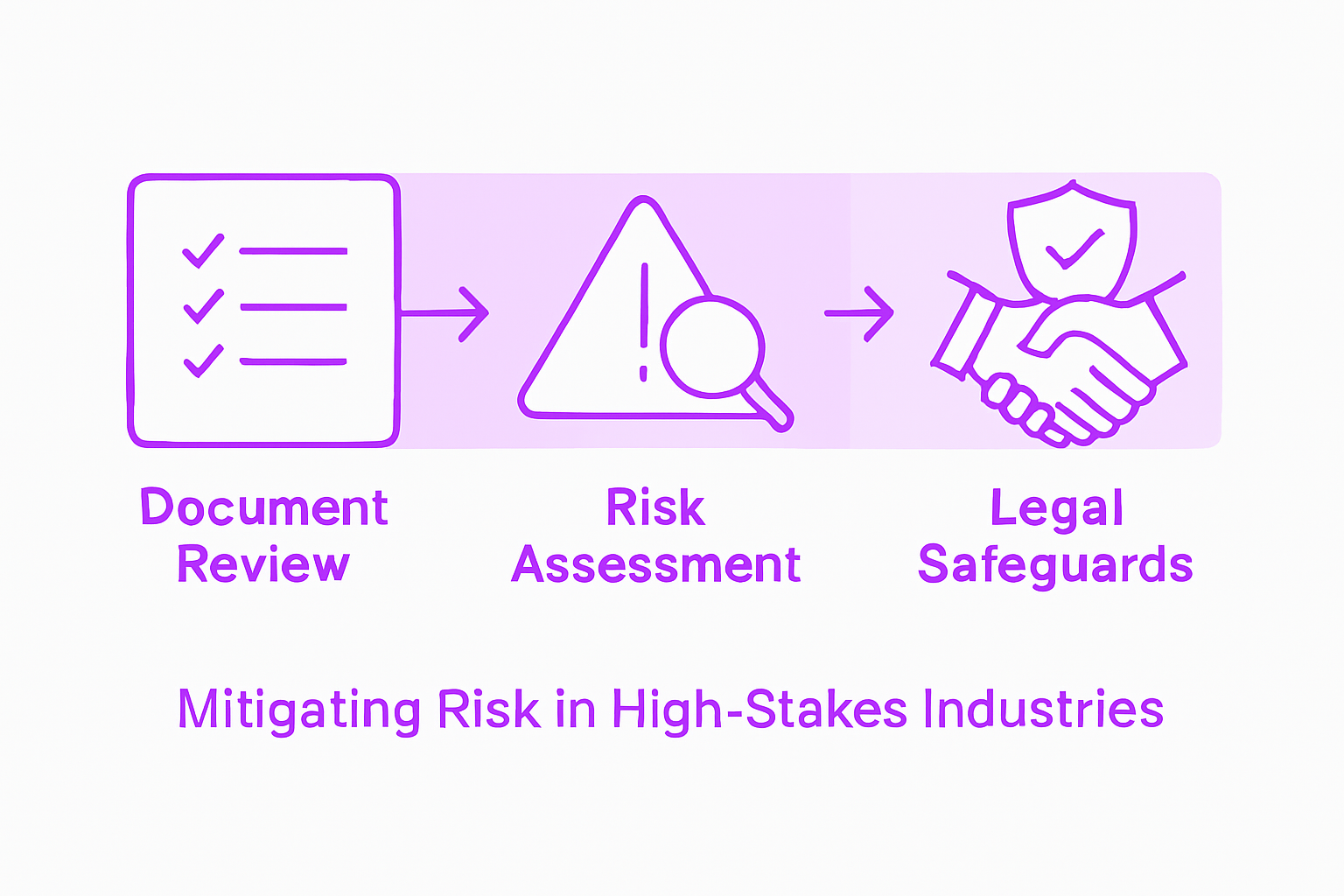
Risk mitigation and legal security represent critical strategic imperatives for businesses operating in high-risk regulated industries. Corporate legal partners develop sophisticated frameworks that proactively address potential legal vulnerabilities, transforming regulatory challenges into manageable operational strategies.
The foundational approach involves comprehensively understanding partnership liability provisions, which outline the critical legal responsibilities and potential financial exposures businesses must navigate. This intricate process requires developing multi-layered risk management strategies that encompass:
Comprehensive legal risk assessments
Detailed compliance infrastructure mapping
Proactive regulatory monitoring systems
Strategic liability protection mechanisms
Advanced legal contingency planning
Legal frameworks like the Partnership Act 1890 provide essential guidelines for establishing robust protective measures. Corporate legal partners leverage these statutory provisions to construct comprehensive risk mitigation strategies, ensuring businesses can operate confidently within complex regulatory environments. By combining deep legal expertise with strategic business insights, these partners create adaptive frameworks that protect organisational interests, minimise potential legal exposures, and enable sustainable growth in challenging high-risk sectors.
Unlock Strategic Legal Support for High-Risk Industries
Operating in sectors like fintech, cryptocurrency, or online gambling brings complex regulatory challenges that demand proactive legal expertise. The article highlights how a corporate legal partner acts as a strategic ally, managing risk, navigating licensing, and ensuring compliance with intricate international laws. At NUR Legal, we understand these pain points deeply and offer tailored solutions to help your business thrive confidently in high-risk markets.
With extensive experience in securing crypto and gambling licences across jurisdictions including Curaçao, Anjouan, Georgia, and Seychelles, we provide more than just legal advice. Our services include comprehensive licensing, contract review, and regulatory compliance designed to mitigate risks and streamline your operational processes. Explore how our professional consultancy can become your trusted corporate legal partner by visiting NUR Legal or learn more about our global company formation and licensing expertise.
Looking to transform regulatory complexity into your competitive advantage?
Partner with NUR Legal today to secure your licences fast and affordably while safeguarding your business with expert legal support. Visit NUR Legal now to start your compliance journey and establish your presence in challenging markets with confidence.
Frequently Asked Questions
What is the role of a corporate legal partner?
A corporate legal partner provides comprehensive legal support and strategic guidance for businesses in high-risk sectors, focusing on managing regulatory compliance and risk mitigation while acting as an integral part of the business team.
How do corporate legal partners support businesses in regulated industries?
They navigate complex regulatory landscapes by developing strategies for compliance, risk management, and licensing, ensuring that businesses can operate efficiently while adhering to legal requirements.
What types of services do corporate legal partners offer?
Corporate legal partners offer services such as regulatory compliance mapping, licensing procurement, contract development, and international regulatory navigation, tailored to the specific needs of high-risk sectors.
Why is risk management important for businesses in high-risk sectors?
Risk management is vital as it helps identify potential legal vulnerabilities and develop strategies to mitigate them, thus ensuring businesses operate within legal boundaries and protect their interests.
Recommended


Comments