
Role of Company Formation in High-Risk Industries


More than 80 percent of British legal managers in fintech and online gambling face steep challenges when forming companies in high-risk jurisdictions such as Curaçao and Seychelles. These sectors demand far more than routine registration, exposing entrepreneurs to complex regulations and real financial risks. Discover the practical essentials for building a resilient business structure that cuts costs and maximises operational safety, tailored to British leaders navigating the world’s most demanding environments.
Table of Contents
Key Takeaways
Point | Details |
Company formation in high-risk sectors | Involves complex legal, regulatory, and financial strategies requiring robust risk management from inception. |
Selection of legal entities | Choose appropriate legal structures and jurisdictions to enhance protection and compliance, tailored to industry needs. |
Compliance and regulatory framework | Develop comprehensive systems that adapt to evolving regulations, ensuring operational integrity and efficiency. |
Risk management strategies | Implement dynamic frameworks that address financial, legal, and operational risks to safeguard against potential vulnerabilities. |
Defining company formation for high-risk sectors
Company formation in high-risk industries represents a complex strategic process involving legal, regulatory, and financial considerations that distinguish these ventures from standard business establishments. Unlike traditional business models, high-risk sectors require comprehensive planning and robust risk mitigation strategies from the initial incorporation stage.
According to research on high-risk business environments, enterprises operating in these domains face elevated likelihoods of financial losses, regulatory violations, and potential reputational damage. These risks stem from multiple factors including complex ownership structures, substantial monetary transactions, and operation within heavily regulated or fraud-prone industries. The definition of company formation thus extends beyond basic registration to encompass intricate compliance frameworks and proactive risk management protocols.
Key characteristics defining company formation in high-risk sectors include comprehensive documentation, rigorous background checks, advanced compliance mechanisms, and strategic jurisdictional selection. Entrepreneurs must navigate complex regulatory landscapes, assess potential legal exposures, and implement sophisticated governance structures that demonstrate transparency and accountability. This involves selecting jurisdictions with balanced regulatory environments, establishing robust internal control systems, and maintaining meticulous financial records.
Pro tip: When forming a company in a high-risk sector, conduct thorough due diligence on potential jurisdictions and invest in comprehensive legal consultation to mitigate potential regulatory challenges.
Types of legal entities and jurisdictions
High-risk industries demand strategic selection of legal entities and jurisdictions that provide optimal regulatory protection, financial flexibility, and operational resilience. Entrepreneurs must carefully evaluate multiple factors when determining the most suitable corporate structure and geographical registration, understanding that these choices significantly impact long-term business sustainability and compliance capabilities.
The Financial Action Task Force regulations emphasise a risk-based approach to legal entity selection, highlighting the critical importance of understanding jurisdictional nuances. Different legal structures offer varying levels of liability protection, tax efficiency, and regulatory oversight. Common legal entities in high-risk sectors include limited liability companies (LLCs), international business companies (IBCs), foundations, and offshore corporations, each presenting unique advantages for businesses operating in complex regulatory environments.
Jurisdictional selection requires comprehensive assessment of regulatory frameworks, taxation policies, licensing requirements, and international recognition. Preferred jurisdictions for high-risk industries often include jurisdictions like Curaçao, Seychelles, Malta, and Georgia, which offer balanced regulatory environments, relatively streamlined incorporation processes, and established frameworks for sectors such as online gambling, financial services, and cryptocurrency enterprises. Key considerations include the jurisdiction’s reputation, banking infrastructure, compliance standards, and potential for international business operations.
Pro tip: Conduct thorough due diligence on potential jurisdictions, focusing not just on immediate cost benefits but on long-term regulatory stability and international business compatibility.
To clarify which legal entities suit various high-risk industries, here is a comparison table:
Legal Entity Type | Liability Protection | Regulatory Complexity | Ideal For |
Limited Liability Company | High, shields owners | Moderate to high | Online gambling, fintech |
International Business Co. | Robust, international reach | Varies by jurisdiction | Cryptocurrency, trading |
Foundation | Asset ringfencing, longevity | High, strict transparency | Charity, asset management |
Offshore Corporation | Varies, tax advantages | High scrutiny, evolving laws | Financial services, remittances |
Licensing, regulatory, and compliance essentials
Navigating the complex landscape of licensing, regulatory requirements, and compliance represents a critical challenge for high-risk industries, demanding sophisticated strategic approaches and comprehensive understanding of evolving legal frameworks. Businesses must develop robust mechanisms to address multifaceted regulatory expectations while maintaining operational efficiency and legal integrity.

High-risk industry risk management demands meticulous attention to regulatory compliance, encompassing rigorous standards across multiple domains including occupational health, safety protocols, environmental regulations, and emerging technological frameworks. Essential compliance strategies involve implementing comprehensive risk assessment methodologies, developing advanced technological monitoring systems, and maintaining transparent documentation that demonstrates consistent adherence to regulatory requirements.
Licensing processes in high-risk sectors are inherently complex, requiring continuous adaptation to changing regulatory landscapes. Successful organisations must develop dynamic compliance frameworks that integrate ongoing risk evaluation, periodic regulatory audits, and proactive risk mitigation strategies. This involves establishing dedicated compliance teams, investing in sophisticated technological infrastructure, and maintaining continuous dialogue with regulatory authorities to ensure alignment with evolving industry standards and legal expectations.
Pro tip: Implement a comprehensive compliance management system that combines automated monitoring tools with expert legal oversight to maintain consistent regulatory alignment and minimise potential legal vulnerabilities.
Operational structure and compliance responsibilities
High-risk industries demand intricate operational structures that seamlessly integrate robust compliance mechanisms, ensuring organisational resilience and regulatory alignment. These complex frameworks require comprehensive strategic planning, advanced technological integration, and a holistic approach to managing multifaceted operational risks and responsibilities.
Corporate governance frameworks in high-risk sectors necessitate sophisticated management approaches that transcend traditional operational models. Successful organisations develop multilayered compliance structures encompassing board-level oversight, dedicated risk management teams, and integrated technological systems that enable real-time monitoring and proactive risk mitigation. These structures must balance operational efficiency with stringent regulatory requirements, creating adaptive mechanisms that can respond swiftly to evolving legal and industry standards.
Operational compliance responsibilities extend far beyond simple regulatory adherence, requiring a comprehensive approach that integrates environmental, health, safety, and process management protocols. High-risk industries must develop integrated management systems that provide granular visibility across different organisational levels, ensuring consistent implementation of safety standards, risk assessment methodologies, and continuous improvement strategies. This involves establishing clear accountability mechanisms, developing comprehensive training programmes, and implementing advanced technological solutions that enable precise tracking and documentation of compliance-related activities.
Pro tip: Develop a dynamic compliance framework with clear escalation pathways, ensuring that risk management responsibilities are explicitly defined at every organisational level and supported by robust technological infrastructure.
Risks, liabilities, and common mistakes
High-risk industries operate within a complex landscape of potential financial, legal, and operational vulnerabilities that demand sophisticated risk management strategies. Understanding these intricate risk profiles requires comprehensive analysis of potential exposures and proactive mitigation approaches that extend beyond traditional compliance frameworks.
Financial control mechanisms are critical for managing elevated risks inherent in these challenging sectors. Common mistakes include inadequate risk assessment processes, failure to establish robust internal control systems, and overlooking emerging regulatory changes that can create significant financial and legal vulnerabilities. Organisations must develop dynamic risk management strategies that anticipate potential challenges and create adaptive response mechanisms.
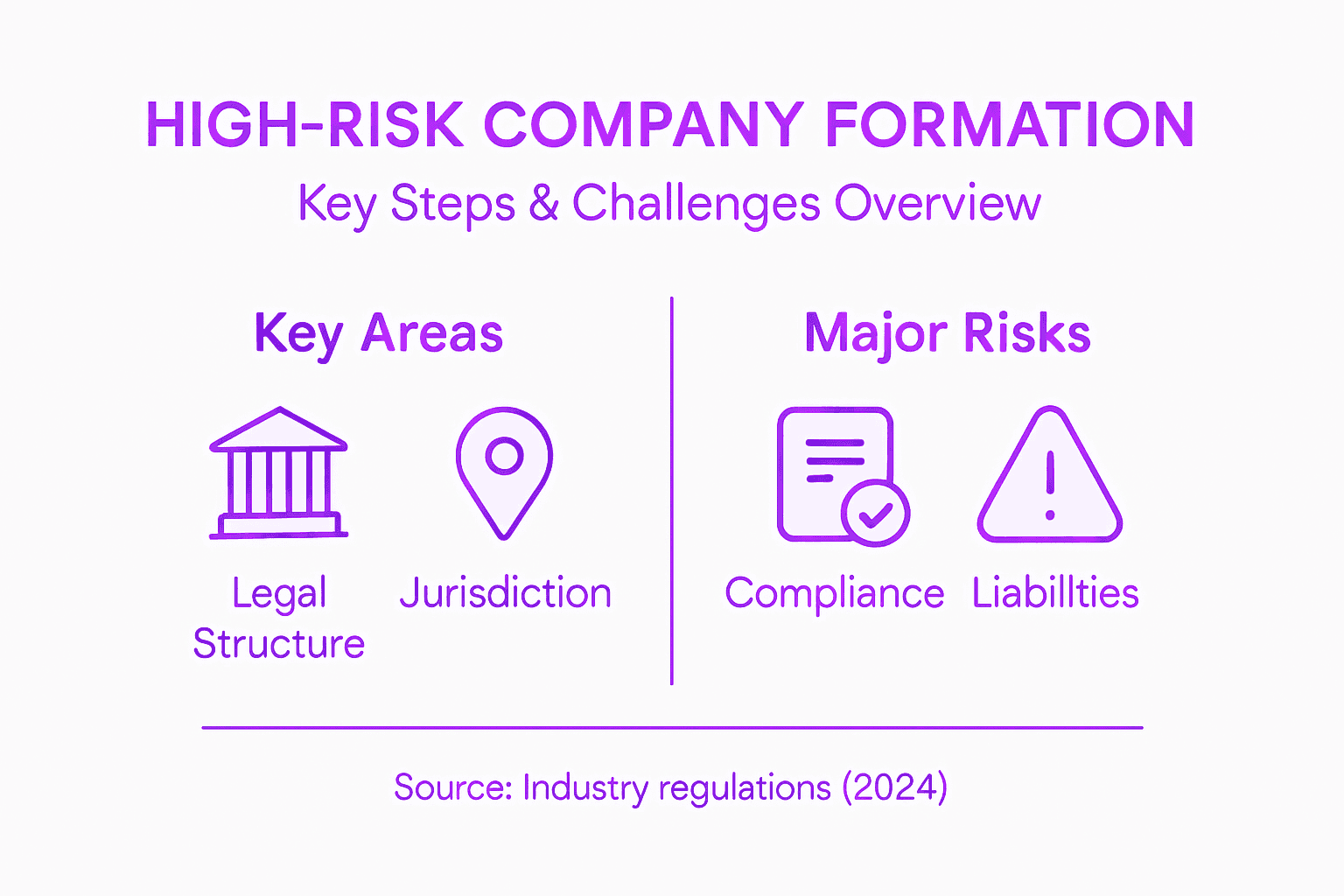
The spectrum of risks in high-risk industries encompasses multiple dimensions, including physical, chemical, biological, and operational hazards. These risks are not merely theoretical but represent tangible threats that can result in substantial financial penalties, legal consequences, and reputational damage. Successful organisations develop comprehensive risk assessment methodologies that integrate continuous monitoring, advanced technological solutions, and interdisciplinary expertise to identify, evaluate, and mitigate potential vulnerabilities across different operational domains.
Pro tip: Implement a quarterly comprehensive risk assessment protocol that involves cross-functional teams and utilises both quantitative data analysis and qualitative expert insights to maintain a proactive risk management approach.
The following table summarises key risk types and strategic responses relevant to high-risk industries:
Risk Type | Common Impact | Example Response Strategy |
Financial | Heavy penalties, losses | Implement strict internal controls |
Regulatory | Licence suspension, audits | Dedicated compliance team, ongoing training |
Reputational | Public trust erosion | Transparent reporting, PR management |
Operational | Disruption, safety issues | Advanced monitoring systems, crisis plans |
Secure Your High-Risk Industry Venture with Expert Company Formation Support
Navigating the complex terrain of company formation in high-risk sectors such as fintech, crypto, and online gambling requires more than just basic registration. The challenges presented by rigorous compliance demands, regulatory controls, and evolving licensing frameworks call for specialised legal expertise. If you are seeking to establish a robust and legally compliant operation, understanding the importance of strategic jurisdiction selection and comprehensive risk management is essential.
NUR Legal offers tailored solutions to help you overcome these obstacles efficiently and confidently. With proven expertise in securing crypto and gambling licences, including fast-track options in Curaçao, Georgia, and Seychelles, we ensure your company formation process aligns perfectly with regulatory requirements while mitigating potential liabilities. Our services include global company formation, legal opinions, contract reviews, and ongoing compliance support designed specifically for high-risk industries.
Take control of your business future today and partner with trusted professionals who understand the nuances of corporate and licensing challenges.
Ready to establish your company in a high-risk sector with confidence and clarity?
Explore how NUR Legal can simplify your licensing and company formation journey at https://nur-legal.com and secure your competitive advantage now.
Frequently Asked Questions
What is company formation in high-risk industries?
Company formation in high-risk industries involves a complex process that includes legal registration, compliance with regulatory standards, and the establishment of robust risk management strategies to mitigate potential financial and reputational risks.
Why is jurisdictional selection important for high-risk companies?
Selecting the right jurisdiction is crucial as it influences regulatory flexibility, compliance requirements, and overall business sustainability. Certain jurisdictions offer favourable environments for high-risk industries, helping to navigate complex regulations more effectively.
What types of legal entities are common in high-risk sectors?
Common legal entities in high-risk sectors include Limited Liability Companies (LLCs), International Business Companies (IBCs), foundations, and offshore corporations, each offering distinct advantages regarding liability protection and regulatory oversight.
What are the key compliance requirements for businesses in high-risk industries?
Key compliance requirements involve rigorous licensing processes, adherence to health and safety regulations, implementation of advanced risk assessment methodologies, and maintaining transparent documentation that demonstrates compliance with evolving legal standards.
Recommended


Comments