
Offshore Licensing: Securing Fast Growth for Fintech


For many European fintech and crypto startup founders, finding an affordable route through global compliance challenges can feel like a moving target. Offshore licensing is no longer just about picking any jurisdiction with loose rules, but about crafting a resilient regulatory foundation that opens new markets and sustains growth. This guide breaks down the complexities of offshore licensing and provides practical insights for building secure, scalable operations—even in high-risk jurisdictions.
Table of Contents
Key Takeaways
Point | Details |
Offshore Licensing Evolution | Offshore licensing has transformed into a compliance mechanism that balances innovative business models with regulatory requirements, enabling fintech firms to operate across borders effectively. |
Strategic Jurisdiction Selection | Choosing the right jurisdiction is crucial; startups should consider regulatory transparency, technological support, and the unique advantages each location offers. |
Comprehensive Application Process | The licensing application necessitates thorough documentation and proactive compliance preparations, including robust AML and KYC frameworks. |
Ongoing Compliance Demands | Continuous compliance is vital, as organisations must adapt to evolving regulations and maintain rigorous operational standards to avoid penalties. |
What Offshore Licensing Means Today
Offshore licensing represents a sophisticated strategic approach for fintech organisations seeking flexible regulatory environments and accelerated market entry. In contemporary global financial services, offshore licensing has transformed from a simple jurisdictional arbitrage into a nuanced compliance mechanism that balances regulatory requirements with innovative business models.
Modern offshore licensing is fundamentally about creating structured pathways for financial technology enterprises to operate across international boundaries. Contemporary fintech regulatory frameworks now incorporate sophisticated supervisory mechanisms that enable businesses to establish credible operational structures while managing potential risks. These licensing approaches are no longer just about finding jurisdictions with lighter regulatory touch, but about constructing comprehensive compliance strategies that demonstrate institutional reliability.
The evolution of offshore licensing reflects profound shifts in global financial technology regulations. Financial services are increasingly recognising that effective licensing requires deep understanding of cross-border legal environments, technological innovation potential, and robust risk management frameworks. Fintech organisations must now demonstrate not just technical capability, but a holistic approach to regulatory compliance that encompasses advanced technological infrastructure, transparent governance models, and proactive risk mitigation strategies.
Pro tip: When exploring offshore licensing, prioritise jurisdictions with clear regulatory guidelines and established financial technology ecosystem support.
Popular Offshore Options for Startups
Fintech startups seeking strategic offshore licensing have several compelling jurisdictions that offer distinctive advantages for rapid market expansion. Global fintech regulatory frameworks reveal nuanced differences between offshore locations that can significantly impact a startup’s growth trajectory and operational flexibility.
Key offshore destinations for fintech startups include jurisdictions like Georgia, Seychelles, Mauritius, and Malta, each offering unique regulatory environments tailored to digital financial services. These locations provide streamlined licensing processes, favourable tax structures, and robust technological infrastructure that enable startups to establish credible international operations swiftly. Particularly attractive options include Georgia’s crypto-friendly regulations, Seychelles’ flexible financial services framework, and Malta’s comprehensive digital innovation support.
Here is a comparison of leading offshore licensing destinations for fintech startups:
Jurisdiction | Regulatory Transparency | Technological Support | Notable Advantage |
Georgia | High | Strong | Crypto-friendly rules |
Seychelles | Moderate | Adequate | Flexible services framework |
Mauritius | High | Excellent | Favourable tax system |
Malta | Very high | Exceptional | Digital innovation support |
When evaluating offshore options, startups must conduct comprehensive due diligence beyond surface-level incentives. Critical considerations include the jurisdiction’s regulatory transparency, compliance requirements, banking integration capabilities, and long-term economic stability. Successful offshore licensing demands a strategic approach that balances regulatory convenience with institutional credibility, ensuring that the chosen jurisdiction supports both immediate operational needs and future scalability.
Pro tip: Conduct detailed legal and financial consultations specific to your startup’s unique business model before selecting an offshore licensing jurisdiction.
How the Application Process Works
The offshore licensing application process for fintech startups involves a comprehensive series of strategic steps designed to evaluate both operational capabilities and regulatory compliance. Fintech regulatory application procedures typically encompass multiple sophisticated assessment stages that examine an organisation’s technological infrastructure, financial stability, and risk management frameworks.
The application typically begins with preliminary documentation submission, which includes detailed business plans, technological architecture specifications, compliance protocols, and comprehensive financial projections. Key documentation requirements often involve demonstrating robust anti-money laundering (AML) processes, detailed Know Your Customer (KYC) procedures, and a clear organisational structure that shows regulatory accountability. Startups must prepare extensive evidence of their technological capabilities, including cybersecurity measures, data protection strategies, and operational resilience frameworks.

Regulatory authorities conduct rigorous due diligence during the application process, which may involve multiple stages of review, interactive discussions, and potential requests for additional information. This evaluation process goes beyond mere paperwork, often including in-depth assessments of the startup’s leadership team, technological infrastructure, and long-term strategic vision. Some jurisdictions incorporate innovative approaches like regulatory sandboxes, which allow startups to demonstrate their operational model in a controlled environment before full licensing consideration.
Pro tip: Prepare a comprehensive documentation package that anticipates potential regulatory queries and demonstrates proactive compliance thinking.
Compliance Challenges and Ongoing Obligations
Fintech startups operating through offshore licensing face a complex landscape of continuous regulatory compliance that extends far beyond initial licensing. Ongoing compliance requirements demand sophisticated monitoring mechanisms and proactive risk management strategies that challenge even experienced financial technology organisations.
The primary compliance challenges include maintaining rigorous anti-money laundering (AML) protocols, implementing robust Know Your Customer (KYC) verification processes, and ensuring comprehensive data protection standards. Offshore licensed firms must continuously update their operational frameworks to align with evolving international regulatory standards, which often involves periodic reporting, financial transparency documentation, and demonstrating ongoing technological security measures. Each jurisdiction may impose unique reporting requirements, necessitating a dynamic and adaptable compliance infrastructure that can rapidly respond to regulatory shifts.
Beyond standard regulatory obligations, fintech startups must also navigate intricate cross-border compliance complexities. This includes managing potential conflicts between different jurisdictional requirements, maintaining detailed audit trails, and implementing sophisticated risk assessment frameworks. Regulatory authorities increasingly expect not just technical compliance, but a holistic approach that demonstrates genuine commitment to financial integrity, consumer protection, and systemic risk mitigation.
Pro tip: Invest in specialised compliance management software that provides real-time regulatory tracking and automated reporting capabilities.
Costs, Risks, and Common Pitfalls
Fintech startups pursuing offshore licensing must navigate a complex landscape of financial and regulatory challenges that can significantly impact their operational sustainability. Financial risks in offshore licensing extend far beyond initial licensing costs, encompassing nuanced operational expenses and potential long-term compliance burdens that can dramatically affect a startup’s financial trajectory.
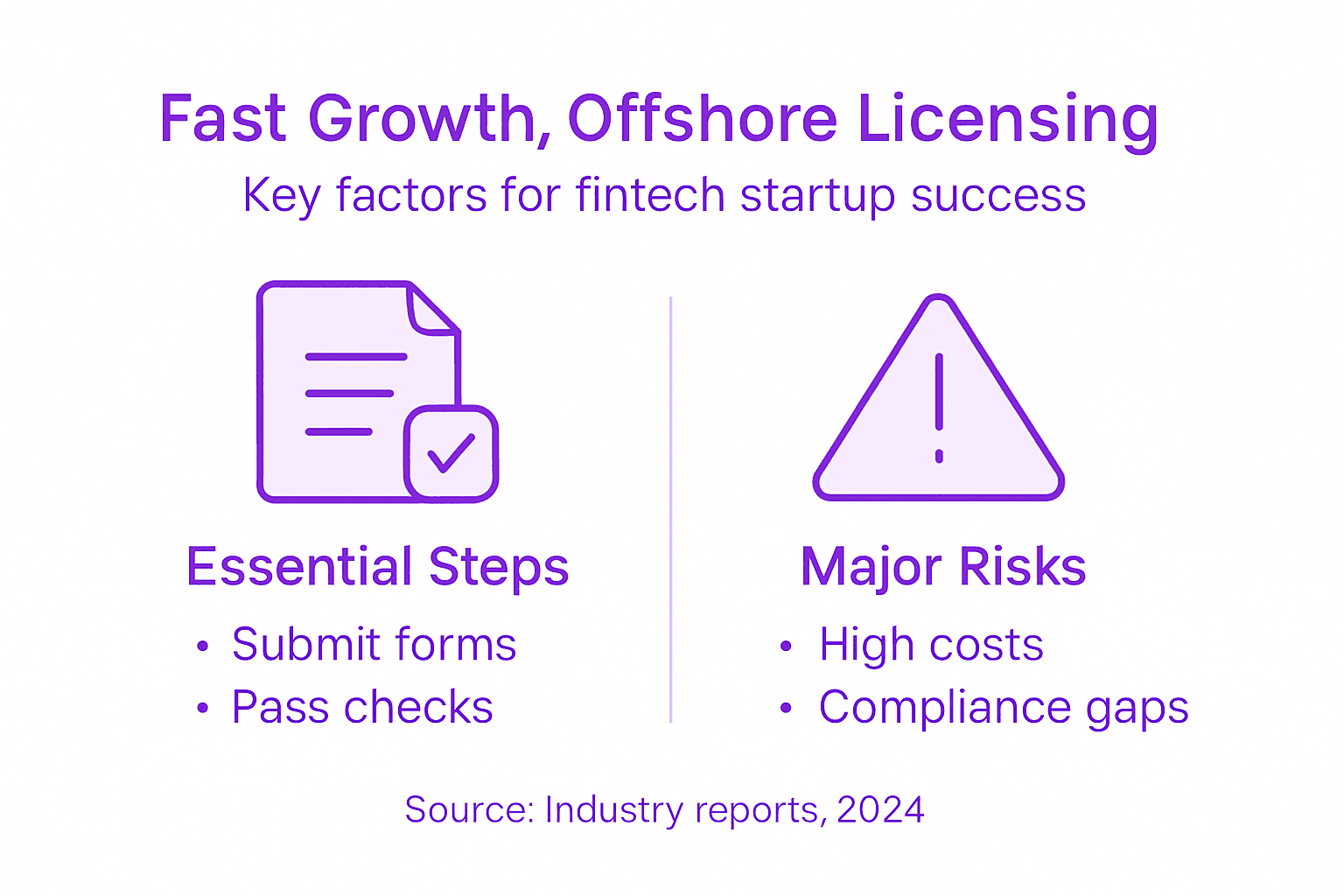
The primary financial risks include substantial upfront investment requirements, ongoing regulatory compliance costs, and potential penalties for inadvertent regulatory breaches. Startups often underestimate the comprehensive expense framework associated with offshore licensing, which typically involves initial application fees, mandatory capital reserves, professional legal consultations, continuous compliance monitoring, and potential recurring jurisdictional reporting expenses. These costs can range from €50,000 to €250,000 annually, depending on the selected jurisdiction and complexity of the financial services being offered.
Beyond direct financial considerations, offshore licensing presents significant reputational and operational risks. Common pitfalls include inadequate due diligence, misunderstanding jurisdictional requirements, and failing to maintain robust internal control systems. Regulatory authorities increasingly scrutinise offshore entities, meaning that even minor compliance lapses can result in severe consequences such as license revocation, substantial financial penalties, or permanent operational restrictions. Startups must develop comprehensive risk management strategies that anticipate potential regulatory shifts and maintain exceptional transparency throughout their operational lifecycle.
To help startups anticipate challenges, this table summarises common offshore licensing risks and mitigation approaches:
Risk Type | Typical Cause | Impact on Startup | Mitigation Strategy |
Compliance gaps | Misunderstood regulations | Fines or licence loss | Regular legal reviews |
High costs | Underestimated ongoing expenses | Profitability threatened | Long-term financial planning |
Reputation loss | Negative regulatory publicity | Trust erosion with partners | Transparent operations |
Operational delay | Incomplete documentation | Slower market entry | Comprehensive pre-application prep |
Pro tip: Allocate a minimum of 15% of your annual budget specifically for compliance and regulatory adaptation to mitigate unexpected offshore licensing challenges.
Navigate Offshore Licensing Challenges with Expert Legal Support
Offshore licensing offers fintech startups a fast track to global growth but comes with complex regulatory hurdles, substantial compliance demands and high risks that can jeopardise your ambitions. This article highlights critical pain points such as understanding cross-border legal nuances, managing rigorous AML and KYC obligations, and balancing substantial upfront costs against long-term sustainability. If you want to secure credible licenses in key jurisdictions like Georgia or Seychelles while avoiding costly pitfalls, expert guidance is essential.
NUR Legal specialises in delivering tailored legal consultancy for fintech startups navigating offshore licensing and compliance. Our services include obtaining fast and affordable crypto and gaming licenses in trusted jurisdictions, comprehensive contract reviews and ongoing regulatory support. With deep expertise in challenging markets and strong relationships with regulators, we ensure your operations remain fully compliant, transparent and resilient as you scale.
Take control of your fintech licensing journey today. Explore how NUR Legal can empower you to secure licences in key jurisdictions such as Georgia and Seychelles with confidence. Visit our main website to learn more and connect with a specialised consultant ready to support your fast growth ambitions. Do not let complex offshore licensing slow you down – act now to establish a legally compliant foundation for your business.
Frequently Asked Questions
What is offshore licensing for fintech organisations?
Offshore licensing refers to a strategic approach that allows fintech companies to operate in flexible regulatory environments, facilitating quicker market entry and compliance with diverse regulations.
What are the key challenges of obtaining offshore licensing?
The process includes extensive documentation, ongoing compliance with anti-money laundering (AML) and Know Your Customer (KYC) protocols, and the need to maintain robust risk management strategies throughout the operational lifecycle.
How can fintech startups choose the right offshore licensing jurisdiction?
Startups should consider factors such as regulatory transparency, technological support, the complexity of compliance requirements, and the overall economic stability of the jurisdiction to ensure long-term operational success.
What are the ongoing obligations for fintech companies with offshore licenses?
Companies must continuously meet regulatory compliance demands, including regular financial reporting, extensive documentation of AML and KYC processes, and align their operations with evolving international standards.
Recommended


Comments