
Complete Guide to the Role of Legal Opinions


Most british businesses operating in high-risk sectors rely on legal opinions to steer through strict regulations. More than 80 percent of organisations in industries like finance and technology seek expert legal advice before major transactions. When the stakes are high, a legal opinion offers not just clarity but also a foundation for decision-making. Understanding how these documents work, and why they matter, helps businesses reduce risk, protect investments, and make stronger strategic choices.
Table of Contents
Key Takeaways
Point | Details |
Role of Legal Opinions | Legal opinions are vital tools for navigating complex regulatory environments in high-risk sectors, offering insights into compliance, liabilities, and strategic approaches. |
Types of Legal Opinions | Different types of legal opinions, such as regulatory compliance and transactional opinions, serve specific purposes tailored to organisational needs. |
Preparation Process | The creation of legal opinions requires thorough research and structured analysis to ensure clarity and actionable recommendations. |
Risks and Limitations | Legal opinions, while crucial, come with risks such as jurisdictional variability and significant financial implications that organisations must acknowledge. |
Defining Legal Opinions in High-Risk Sectors
In the complex landscape of high-risk industries, a legal opinion serves as a critical navigational tool for businesses seeking clarity and protection. According to thelegalopinions, a legal opinion is a written statement by a legal expert that provides authoritative advice on specific legal matters, particularly crucial in sectors with intricate regulatory environments.
Legal opinions play a fundamental role in assessing and mitigating potential legal risks for organisations operating in challenging regulatory spaces. These documents offer comprehensive insights into legal compliance, potential liabilities, and strategic approaches to navigating complex regulatory frameworks. As justice highlights, such opinions guide organisations in ensuring their actions and policies align with existing legal standards, thereby reducing potential legal exposures.
Key characteristics of legal opinions in high-risk sectors typically include:
Detailed analysis of specific legal scenarios
Expert assessment of regulatory compliance
Identification of potential legal risks
Recommendations for risk mitigation strategies
Professional evaluation of legal frameworks
For businesses operating in sectors such as fintech, cryptocurrency, online gambling, and financial services, legal opinions represent more than just advisory documents. They are strategic instruments that provide a structured approach to understanding complex legal landscapes, enabling organisations to make informed decisions with greater confidence and reduced legal uncertainty.
Types of Legal Opinions and Their Purposes
Legal opinions are not uniform documents but represent a diverse range of specialised advisory instruments tailored to specific business contexts and regulatory requirements. Cross-border transaction opinions represent one critical category, wherein legal experts provide comprehensive assessments of transaction validity across multiple jurisdictional frameworks. As en explains, these foreign legal opinions are standardised documents that certify transaction effectiveness under applicable international legal systems.
In high-risk sectors such as financial services, technology, and gambling, several distinct types of legal opinions emerge, each serving unique strategic purposes. Regulatory compliance opinions assess an organisation’s adherence to specific legal standards, while transactional opinions evaluate the legal implications of specific business arrangements. Corporate governance opinions examine internal operational structures, ensuring alignment with statutory requirements and mitigating potential governance risks.
Key types of legal opinions include:

Regulatory Compliance Opinions: Detailed assessments of regulatory adherence
Transactional Opinions: Evaluations of specific business transactions
Corporate Governance Opinions: Reviews of organisational structural compliance
Risk Assessment Opinions: Comprehensive analyses of potential legal vulnerabilities
Cross-Border Transaction Opinions: Validations of international business operations
These specialised documents go beyond mere advisory functions, serving as strategic instruments that enable businesses to navigate complex legal landscapes with precision and confidence. By providing authoritative insights into legal complexities, these opinions help organisations make informed decisions, manage potential risks, and maintain robust legal frameworks across diverse and challenging operational environments.
How Legal Opinions Are Prepared and Delivered
The preparation of legal opinions represents a meticulous and structured process that demands precision, comprehensive research, and strategic communication. According to blogs, a legal opinion must be structured logically, written in plain language, and contain references to relevant authority, enabling clients to make informed decisions based on reasoned options.
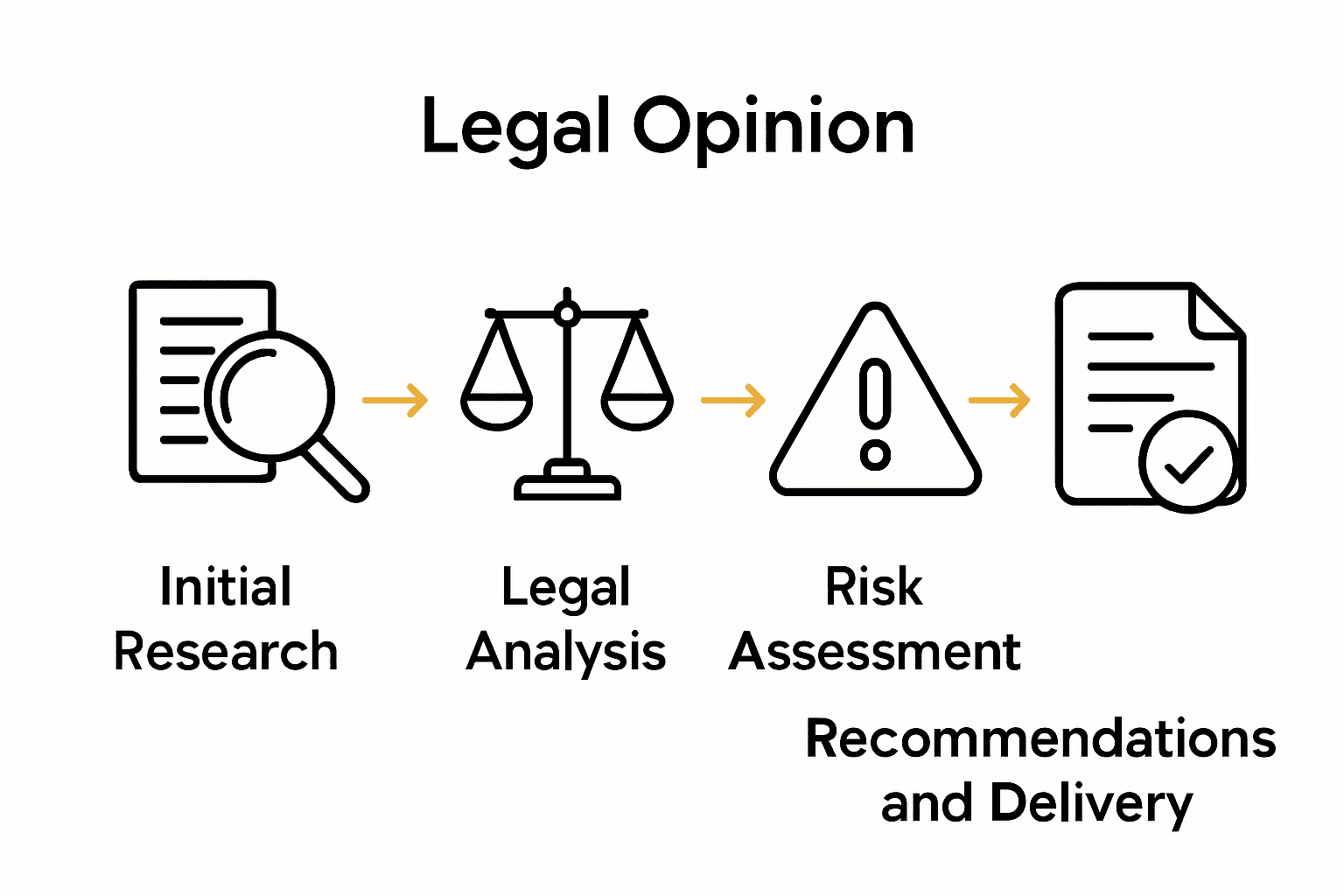
The development of a legal opinion typically involves several critical stages. Legal professionals commence by conducting an exhaustive investigation of the specific legal scenario, gathering all pertinent documentation, regulatory frameworks, and contextual information. This initial research phase involves deep analysis of existing legal precedents, statutory requirements, and potential interpretative nuances that might impact the final assessment. Experts then synthesise these findings into a comprehensive narrative that clearly articulates legal risks, potential implications, and recommended courses of action.
Key components of a well-prepared legal opinion include:
Detailed Factual Background: Comprehensive context of the legal scenario
Legal Analysis: Rigorous examination of applicable laws and regulations
Risk Assessment: Identification of potential legal vulnerabilities
Recommendations: Strategic guidance for navigating legal complexities
Supporting Documentation: Citations and references substantiating conclusions
The delivery of legal opinions is equally sophisticated, with methodologies tailored to specific client needs and regulatory environments. Depending on the complexity of the matter, these documents may be presented through formal written reports, interactive consultation sessions, or comprehensive digital briefings. The ultimate objective remains consistent: providing clear, authoritative guidance that empowers organisations to make well-informed legal and strategic decisions with confidence and clarity.
Legal Foundation and Regulatory Importance
The legal foundation of legal opinions represents a critical infrastructure that underpins regulatory compliance and organisational governance across complex business landscapes. As en highlights, law reports compile judicial opinions that serve as authoritative records, providing consistent and authentic statements of primary legal principles essential for comprehensive legal research and practice.
In high-risk sectors such as financial services, technology, and international business, legal opinions function as sophisticated navigational instruments that bridge theoretical legal frameworks and practical operational requirements. These documents not only interpret existing regulations but also provide strategic guidance for organisations seeking to maintain robust compliance mechanisms. As justice explains, legal opinions guide executive agencies in ensuring their actions align with established legal standards, reinforcing the fundamental regulatory infrastructure.
Key aspects of legal foundation and regulatory importance include:
Precedent Establishment: Creating benchmark interpretations of legal principles
Compliance Verification: Assessing organisational alignment with regulatory requirements
Risk Mitigation: Identifying potential legal vulnerabilities
Interpretative Guidance: Clarifying complex regulatory frameworks
Strategic Decision Support: Providing authoritative insights for governance
Beyond mere advisory functions, legal opinions serve as critical instruments of legal interpretation, transforming abstract regulatory language into actionable strategic guidance. They represent a sophisticated mechanism for translating complex legal principles into practical organisational strategies, enabling businesses to navigate intricate regulatory environments with precision and confidence.
Risks, Limitations, and Cost Considerations
Legal opinions represent sophisticated advisory instruments that, while invaluable, are not without inherent complexities and potential limitations. As en explicates, foreign legal opinions particularly demonstrate significant variability, especially in cross-border transactions where differences in legal systems can introduce substantial interpretative challenges and potential risks.
The financial implications of obtaining comprehensive legal opinions can be substantial, particularly for organisations operating in multijurisdictional environments. Expertise in navigating diverse regulatory landscapes requires significant investment, with costs typically correlating directly to the complexity of the legal scenario, the breadth of jurisdictional analysis required, and the depth of professional expertise engaged. These expenses encompass not merely the direct fees for legal consultation, but also potential indirect costs associated with comprehensive research, detailed document review, and sophisticated risk assessment processes.
Key risks and limitations to consider include:
Jurisdictional Variability: Potential inconsistencies across different legal systems
Interpretative Complexity: Challenges in translating legal principles between frameworks
Financial Implications: Substantial costs for comprehensive legal analysis
Expertise Dependencies: Reliance on specialised legal professional knowledge
Temporal Limitations: Potential obsolescence of legal interpretations over time
While legal opinions represent critical strategic tools, organisations must approach them with nuanced understanding. They are not absolute guarantees but rather professional assessments that provide informed guidance. Prudent businesses will view these documents as sophisticated risk management instruments, complementing but not replacing comprehensive internal governance mechanisms and ongoing regulatory vigilance.
Secure Your Business Future with Expert Legal Opinions
Navigating the complexities of legal opinions in high-risk sectors is not just challenging it is essential for protecting your business from regulatory uncertainties and costly risks. The detailed legal analysis and risk assessments discussed in the article highlight how specialised legal opinions provide clarity and strategic guidance in sectors like fintech, crypto, and online gambling. At Nur Legal, we understand these precise challenges and offer comprehensive legal consultancy services tailored to high-risk industries. Our expertise in obtaining licences and crafting thorough legal opinions ensures your operations remain fully compliant with multi-jurisdictional regulatory frameworks.
Take control of your company’s compliance and licensing needs today with Nur Legal. Benefit from our proven experience in securing crypto and gambling licences from reliable jurisdictions such as Curaçao, Georgia and Seychelles. Don’t let complex regulations stall your growth. Visit Nur Legal now to access professional legal opinions, licensing solutions and contract reviews that empower your business with confidence and transparency. Explore how we can help you transform legal risk into a strategic advantage by contacting us directly or learning more about our licensing services and corporate support. Act now to safeguard your future in competitive and regulated markets.
Frequently Asked Questions
What is a legal opinion in high-risk sectors?
A legal opinion in high-risk sectors is a written statement by a legal expert that provides authoritative advice on specific legal matters, helping businesses navigate complex regulatory environments and mitigate potential legal risks.
What types of legal opinions are most common in high-risk industries?
Common types of legal opinions in high-risk industries include regulatory compliance opinions, transactional opinions, corporate governance opinions, risk assessment opinions, and cross-border transaction opinions, each tailored to address specific business contexts.
How are legal opinions prepared and delivered?
Legal opinions are prepared through a meticulous process involving extensive research, legal analysis, risk assessments, and recommendations. They may be delivered in the form of written reports, consultations, or digital briefings, depending on client needs and complexity.
What are the potential risks and limitations of obtaining legal opinions?
Potential risks and limitations include jurisdictional variability, interpretative complexity, significant financial implications, dependence on specialised legal expertise, and the possibility of legal interpretations becoming obsolete over time.


Comments