
Role of Regulators – Impact on High-Risk Licensing


More than 60 percent of fintech and crypto startups cite regulatory uncertainty as a primary barrier to cross-border growth, especially when tackling british and international licensing hurdles. For legal and compliance officers, working in high-risk sectors means mastering a maze of evolving rules that shape everything from innovation to operational compliance. This practical guide sheds light on the pivotal role regulators play and deciphers what sets high-risk industry oversight apart, helping your team stay ahead of penalties and unexpected setbacks.
Table of Contents
Key Takeaways
Point | Details |
Role of Regulators | Regulators oversee high-risk industries, balancing innovation and public safety through comprehensive frameworks. |
Types of Regulatory Authorities | Authorities vary in structure and powers, focusing on specific sectors such as finance, technology, and gambling. |
Compliance Obligations | Organisations must maintain rigorous compliance frameworks to mitigate risks and avoid significant penalties. |
Licensing Processes | Obtaining licences is complex and requires detailed preparation tailored to each jurisdiction’s regulatory landscape. |
Defining Regulators in High-Risk Industries
Regulators play a critical role in overseeing complex and potentially dangerous industries, establishing frameworks that balance innovation with public safety. In high-risk sectors such as finance, technology, gambling, and chemical processing, these institutional bodies function as sophisticated governance mechanisms designed to mitigate potential systemic risks.
Understanding regulatory bodies requires recognising their multifaceted responsibilities. Comprehensive risk governance frameworks demonstrate that regulators are not merely enforcement entities, but complex institutional arrangements shaped by contextual factors including market dynamics, public perception, and technological evolution. Their mandate extends beyond traditional compliance, encompassing proactive risk management, standards development, and strategic sector guidance.
The structural composition of regulatory bodies varies significantly across different high-risk industries. In financial technology, for instance, regulators might include national banking authorities, financial conduct agencies, and specialised technology oversight committees. These organisations develop intricate protocols addressing critical concerns such as consumer protection, financial stability, technological security, and preventing potential criminal activities like money laundering or fraudulent transactions.
Key Functions of Regulators in High-Risk Sectors:
Establishing comprehensive legal frameworks
Monitoring industry practices and compliance
Developing standardised operational guidelines
Investigating potential systemic risks
Enforcing penalties for regulatory breaches
Professional Insight: Successful navigation of regulatory landscapes requires continuous learning, proactive engagement with regulatory updates, and maintaining transparent operational practices.
Types of Regulatory Authorities and Their Powers
Regulatory authorities operate across diverse high-risk industries through complex institutional frameworks that balance oversight, safety, and innovation. Governmental and private regulatory mechanisms have evolved significantly, creating intricate networks of public and private entities responsible for establishing and enforcing critical industry standards.
In financial technology and gambling sectors, regulatory authorities typically comprise multiple institutional bodies with distinct yet interconnected powers. These include national financial conduct agencies, specialised technology oversight committees, banking regulators, and international compliance organisations. Each authority possesses specific jurisdictional powers ranging from licensing and registration to comprehensive investigative and enforcement capabilities.

The scope of regulatory powers extends far beyond traditional compliance monitoring. Modern regulatory bodies are empowered to conduct comprehensive investigations, impose substantial financial penalties, revoke operational licences, and mandate systemic changes in organisational practices. In high-risk industries like financial technology, gambling, and emerging digital sectors, these authorities play a crucial role in maintaining market integrity, protecting consumer interests, and mitigating potential systemic risks.
Primary Types of Regulatory Authorities:
National Financial Regulators
International Compliance Organisations
Technology Oversight Committees
Industry-Specific Regulatory Bodies
Independent Compliance Agencies
Typical Regulatory Powers:
To better understand how regulatory authorities differ in high-risk industries, see the comparison below:
Regulatory Authority Type | Primary Sector | Governance Focus | Example Powers |
National Financial Regulator | Banking, fintech | Market stability, compliance | Licensing, financial audits |
Technology Oversight Committee | Digital tech, crypto | Cybersecurity, innovation | Setting tech standards |
International Compliance Organisation | Cross-sector finance | Cross-border cooperation | Investigating global breaches |
Independent Compliance Agency | Gambling, fintech | Consumer protection | Imposing penalties, monitoring |
Issuing and revoking operational licences
Conducting comprehensive compliance audits
Imposing financial penalties
Establishing industry-wide standards
Investigating potential regulatory breaches
Professional Insight: Successful regulatory navigation requires understanding the nuanced powers of different authorities and maintaining proactive, transparent operational practices.
Legal Frameworks Governing Fintech and Crypto
Legal frameworks for fintech and cryptocurrency sectors represent complex and dynamic regulatory ecosystems that continuously adapt to technological innovations and emerging market challenges. Regulatory risk management strategies have become increasingly sophisticated, requiring comprehensive approaches that balance technological innovation with robust consumer protection mechanisms.
The international landscape of fintech and crypto regulation demonstrates significant variations across different jurisdictions. Some countries adopt progressive, innovation-friendly frameworks, while others maintain stringent control mechanisms. Regulatory bodies must navigate intricate challenges including preventing financial crimes, protecting investor interests, managing systemic risks, and supporting technological advancement simultaneously. These frameworks typically encompass multiple dimensions such as anti-money laundering (AML) regulations, know-your-customer (KYC) protocols, capital requirements, and operational compliance standards.
Modern legal frameworks increasingly emphasise proactive risk assessment and adaptive regulatory mechanisms. Emerging regulatory approaches incorporate advanced technological tools, scenario-based assessments, and flexible compliance models that can rapidly respond to technological shifts. These sophisticated frameworks aim to create transparent, secure environments that protect market participants while fostering innovation and technological development in rapidly evolving digital financial ecosystems.
Key Components of Fintech and Crypto Legal Frameworks:
Anti-Money Laundering (AML) Regulations
Know Your Customer (KYC) Protocols
Capital and Liquidity Requirements
Cybersecurity Standards
Consumer Protection Mechanisms
Licensing and Registration Procedures
Critical Regulatory Objectives:
Preventing Financial Fraud
Protecting Consumer Interests
Maintaining Market Stability
Supporting Technological Innovation
Ensuring Transparent Operations
Professional Insight: Successful regulatory compliance requires continuous education, proactive adaptation to changing legal landscapes, and maintaining robust internal governance mechanisms.
Process for Obtaining Licences Across Jurisdictions
Obtaining licences across multiple jurisdictions represents a complex and strategically nuanced process that requires meticulous planning, comprehensive documentation, and deep understanding of diverse regulatory landscapes. Regulatory quality and licensing procedures demand sophisticated approaches that navigate intricate institutional frameworks and compliance requirements unique to each geographical region.
The licensing process typically involves multiple critical stages that vary significantly between jurisdictions. Organisations must prepare comprehensive application packages demonstrating financial stability, operational integrity, technological competence, and robust risk management protocols. This involves assembling detailed documentation including corporate governance structures, financial statements, compliance frameworks, technological infrastructure assessments, and comprehensive background checks on key personnel. Different regulatory bodies may emphasise distinct aspects of organisational capability, requiring tailored strategic approaches for each jurisdiction.
Successful cross-jurisdictional licensing necessitates a proactive and adaptive approach. This involves conducting thorough preliminary research, engaging with local regulatory experts, understanding specific regional requirements, and developing flexible compliance strategies. Organisations must anticipate potential regulatory challenges, maintain transparent communication channels with relevant authorities, and demonstrate a commitment to ongoing compliance and operational excellence. The most successful applicants approach licensing as a strategic opportunity for building institutional credibility rather than merely a bureaucratic requirement.
Key Documentation Requirements:
Comprehensive Corporate Governance Frameworks
Detailed Financial Statements
Risk Management Protocols
Technology Infrastructure Assessments
Compliance and Anti-Money Laundering Policies
Key Personnel Background Checks
Strategic Licensing Stages:
Here is a summary showing how jurisdictions differ in licensing complexity and typical documentation expectations:
Region | Licensing Complexity | Typical Documentation Required | Time to Approval |
United Kingdom | Moderate | AML, KYC, financial reports, IT audits | 3–6 months |
European Union | High | Governance, risk policies, background checks | 6–12 months |
Singapore | Progressive | Tech infrastructure, compliance systems | 2–5 months |
United States | Variable by state | State-level licences, financial stability | 4–12 months |
Preliminary Research and Jurisdiction Analysis
Documentation Preparation
Initial Application Submission
Regulatory Review and Assessment
Additional Information Requests
Final Licence Approval
Professional Insight: Successful licence acquisition requires treating each jurisdiction as a unique ecosystem, investing in detailed preparation, and maintaining exceptional standards of transparency and operational integrity.
Obligations, Risks and Common Compliance Failures
Compliance obligations in high-risk industries represent a complex landscape of regulatory requirements that demand meticulous attention and proactive management. Compliance failure mechanisms reveal intricate challenges organisations face when navigating increasingly sophisticated regulatory environments, where a single oversight can result in substantial legal and financial consequences.
The most prevalent compliance risks emerge from inadequate internal processes, communication breakdowns, and insufficient understanding of regulatory nuances. These failures typically manifest through incomplete documentation, inconsistent risk management protocols, weak internal control systems, and limited staff training programmes. Organisations operating in high-risk sectors must develop comprehensive compliance frameworks that anticipate potential regulatory vulnerabilities and implement robust monitoring mechanisms to mitigate systemic risks.
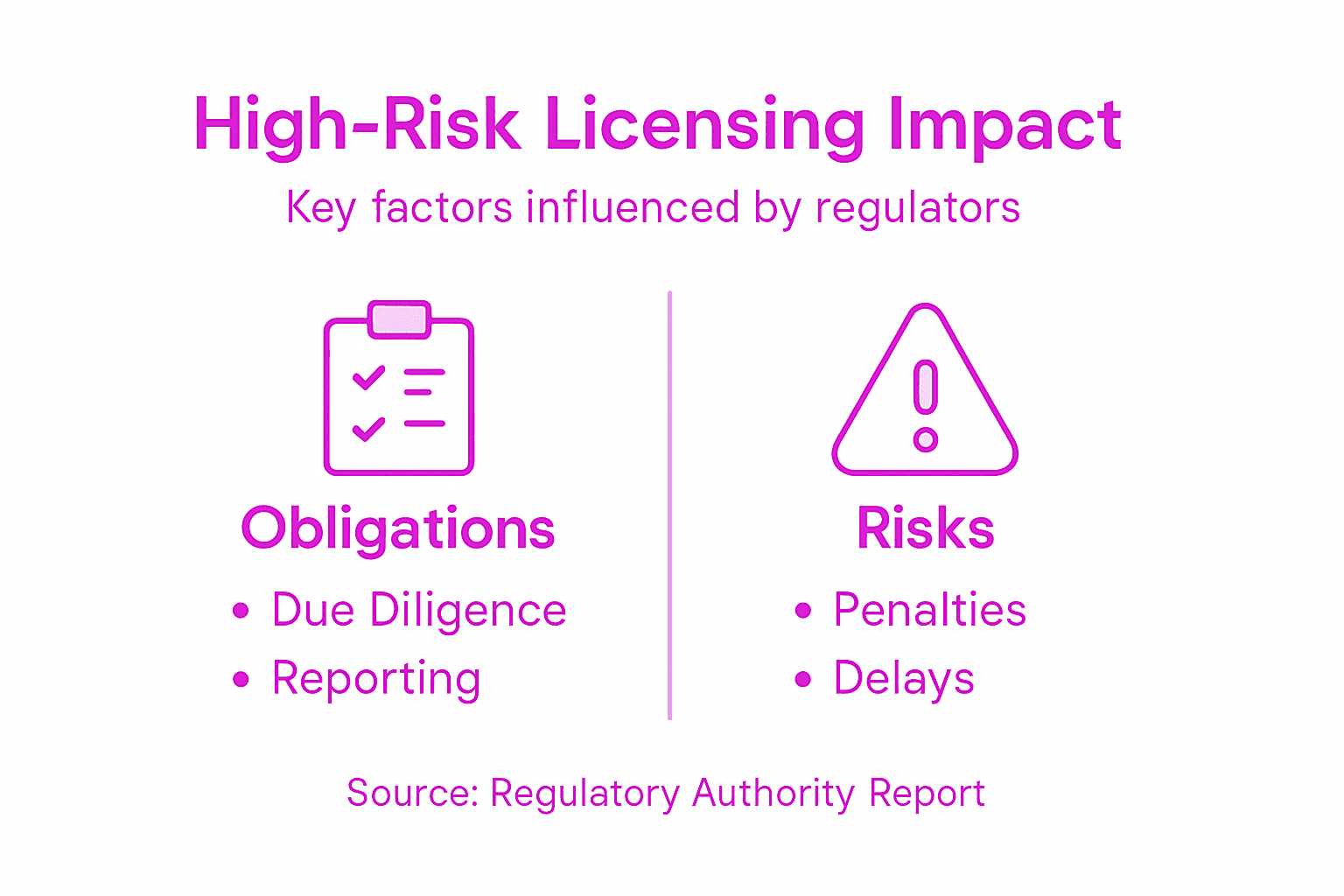
Regulatory obligations extend far beyond mere procedural adherence, encompassing holistic organisational commitment to transparency, ethical conduct, and continuous improvement. Critical compliance requirements include maintaining accurate financial records, implementing rigorous anti-money laundering procedures, conducting regular risk assessments, ensuring data protection standards, and developing transparent reporting mechanisms. Organisations that fail to integrate these multifaceted compliance strategies expose themselves to significant reputational damage, financial penalties, and potential operational restrictions.
Primary Compliance Obligations:
Maintaining Accurate Financial Documentation
Implementing Anti-Money Laundering Protocols
Conducting Regular Risk Assessments
Ensuring Data Protection Standards
Developing Transparent Reporting Mechanisms
Common Compliance Failure Points:
Inadequate Staff Training
Incomplete Risk Documentation
Weak Internal Control Systems
Inconsistent Regulatory Monitoring
Limited Communication Channels
Professional Insight: Successful compliance requires treating regulatory requirements as strategic opportunities for organisational improvement, not merely bureaucratic checklists.
Navigate High-Risk Licensing with Trusted Legal Expertise
Understanding the pivotal role regulators play in high-risk industries reveals the challenges businesses face in securing licences and maintaining compliance. With complex frameworks involving multiple jurisdictions and rigorous obligations such as AML and KYC protocols, organisations often struggle to align their operations with evolving legal demands. Whether it is fintech, crypto, or gambling sectors, these regulatory hurdles can delay your business growth and put you at risk of costly compliance failures.
At NUR Legal, we specialise in bridging this gap by offering tailored legal consultancy that simplifies your licensing journey. Our expertise spans obtaining crypto, gambling, and financial licences across diverse regions including trusted jurisdictions like Curaçao, Georgia, and Seychelles. We understand the importance of transparent and proactive regulatory engagement and provide comprehensive solutions from corporate formation to contract review. Our proven track record in building strong relationships with regulators allows you to confidently navigate complex institutional frameworks and accelerate your market entry.
Key benefits of partnering with NUR Legal:
Efficient licence acquisition strategies adapted to your jurisdiction
Robust compliance frameworks to mitigate risks
Expert legal opinions and contract support
Affordable high-level services designed for startups and established businesses
Elevate your business’s regulatory readiness and secure your future in high-risk markets with trusted guidance.
Ready to overcome licensing challenges and ensure compliance with confidence Discover how NUR Legal’s expert solutions can empower your fintech or crypto venture today. Visit our site and start your journey towards seamless regulation and sustainable growth now.
Frequently Asked Questions
What are the primary functions of regulators in high-risk industries?
Regulators establish legal frameworks, monitor compliance, develop operational guidelines, investigate systemic risks, and enforce penalties for breaches.
How do regulatory authorities differ across various high-risk sectors?
Different regulatory authorities, such as national financial regulators and technology oversight committees, have distinct powers focused on market stability, consumer protection, and compliance.
What are the key components involved in obtaining licences in high-risk sectors?
Key documentation requirements include comprehensive corporate governance frameworks, detailed financial statements, risk management protocols, and compliance policies.
What are common compliance risks that organisations face in high-risk industries?
Common risks include insufficient internal processes, communication breakdowns, inadequate training, incomplete documentation, and inconsistent regulatory monitoring.
Recommended


Comments