
What Is a Legal Entity? Critical Insights for Regulated Industries


Every European fintech and crypto founder knows the pressure of getting compliance right before seeking licensing. In an era where legal structures can spell the difference between success and regulatory setback, understanding the distinct legal personality of your entity is vital. This article breaks down the key features, common misconceptions, and practical steps around legal entities so you can make informed decisions and build solid foundations for regulatory approval.
Table of Contents
Key Takeaways
Point | Details |
Legal Entity Definition | A legal entity is an organisation recognised by law, operating independently with distinct legal rights and responsibilities. |
Common Misconceptions | Many assume legal entities offer absolute protection; understanding their regulatory requirements is crucial for compliance. |
Types of Legal Entities | In regulated sectors, entities like limited liability companies and corporations provide specific compliance and risk management benefits. |
Risks and Obligations | Legal entities face unique liability risks; proactive risk management and compliance strategies are essential to avoid regulatory breaches. |
Legal Entity Defined and Common Misconceptions
A legal entity represents an organisational construct recognised by law as possessing independent legal rights and responsibilities. Distinct legal personality enables organisations to operate autonomously, separate from their individual members or owners. This fundamental concept allows businesses to engage in complex legal transactions, own property, enter contracts, and participate in legal proceedings as a singular, unified body.
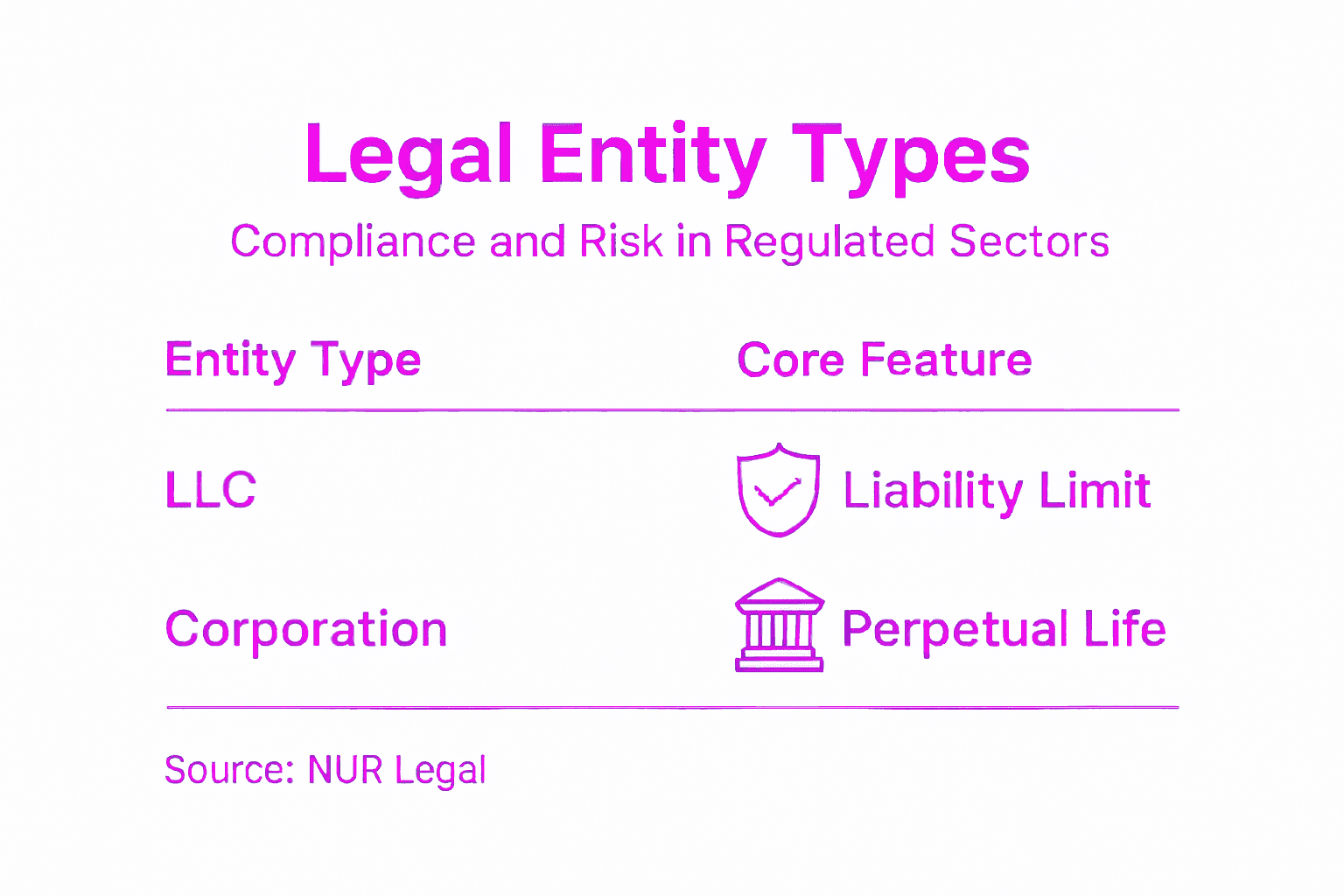
The core attributes of a legal entity include the ability to function independently, with three primary characteristics distinguishing it from individual ownership. First, it maintains separate legal personality, meaning the organisation exists as a distinct legal person with rights and obligations. Second, it provides limited liability protection, shielding individual owners’ personal assets from the entity’s financial risks. Third, it enables perpetual existence, allowing the organisation to continue operating beyond changes in ownership or management.
Common misconceptions about legal entities often stem from misunderstanding these fundamental principles. Many entrepreneurs mistakenly believe that a legal entity offers absolute protection or that it operates exactly like an individual. In reality, legal entities have specific regulatory requirements that vary by jurisdiction, industry, and organisational structure. Understanding these nuanced distinctions is crucial for compliance and strategic business planning.
Professional Insight: When establishing a legal entity, consult with legal professionals who specialise in corporate structures to ensure you select the most appropriate framework for your specific business needs and regulatory environment.
Types of Legal Entities in Regulated Sectors
Regulated industries require specific legal entity structures that provide robust compliance frameworks and risk management capabilities. Business entities vary significantly across different sectors, with each type offering unique legal and operational advantages. In high-risk domains such as financial services, gambling, and cryptocurrency, selecting the appropriate legal structure becomes critically important for maintaining regulatory compliance and protecting organisational interests.
The primary legal entity types encountered in regulated sectors include limited liability companies (LLCs), corporations, partnerships, and public limited companies. Each structure presents distinct characteristics that impact liability protection, taxation, and governance. For instance, limited liability partnerships provide individual partners protection from another partner’s potential legal liabilities, while corporations offer shareholders comprehensive protection through their separate legal personality. Different legal entity types emerge based on jurisdictional requirements, with nuanced variations across European and international regulatory landscapes.
In practice, financial technology and cryptocurrency enterprises frequently opt for limited liability companies or corporations due to their enhanced regulatory compliance capabilities. These structures enable organisations to separate personal and business assets, implement robust governance mechanisms, and demonstrate transparency to regulatory authorities. Company formation in high-risk industries requires meticulous consideration of legal entity characteristics, ensuring alignment with sector-specific compliance mandates and risk management protocols.
The table below summarises how different legal entity types affect core business areas in regulated sectors:
Legal Entity Type | Compliance Complexity | Risk Protection | Typical Use Case |
Limited Company | Moderate to high | Strong | Fintech start-ups |
Corporation | High | Comprehensive | International finance firms |
Partnership | Moderate | Varies | Professional practices |
Public Limited Co | Very high | Extensive | Stock exchange listing |
Professional Insight: Conduct comprehensive legal and financial due diligence before selecting a legal entity, considering jurisdiction-specific regulations, potential liability exposures, and long-term strategic objectives.
Key Features and Legal Status Explained
Legal status represents the fundamental framework through which organisations establish their operational and regulatory identity. Legal entities possess distinct legal rights that enable them to function autonomously within complex regulatory environments. This critical designation allows businesses to engage in contractual agreements, own property, initiate legal proceedings, and assume independent financial responsibilities separate from their individual owners or shareholders.

The core features of a legal entity’s status include perpetual succession, limited liability protection, and independent legal personality. These characteristics ensure that the organisation can continue operating despite changes in ownership, protect individual stakeholders from comprehensive financial risks, and maintain a consistent legal identity. Separate legal personality is a complex yet fundamental concept that distinguishes the entity as a distinct legal construct capable of existing independently of its founders or current management team.
In regulated industries such as financial services, gambling, and cryptocurrency, the legal status of an entity becomes particularly nuanced. Organisations must demonstrate robust governance mechanisms, transparent operational protocols, and comprehensive compliance frameworks. Legal compliance workflow for global licensing plays a critical role in establishing and maintaining the legal credibility of these specialised business structures, ensuring they meet stringent international regulatory standards and maintain their operational legitimacy.
Professional Insight: Regularly audit your legal entity’s status and compliance documentation to ensure continued alignment with evolving regulatory requirements and jurisdictional guidelines.
Formation, Registration, and Compliance Steps
Legal entity formation represents a complex process requiring strategic planning and meticulous attention to regulatory requirements. Business entity registration involves multiple critical steps that extend far beyond simple document filing. Organisations in regulated industries must navigate intricate legal landscapes, ensuring their structural framework meets stringent governmental and industry-specific compliance standards.
The foundational steps of legal entity formation typically include three primary phases. First, entrepreneurs must carefully select an appropriate legal structure that aligns with their operational objectives and risk management strategies. Entity formation requires comprehensive documentation, including drafting precise incorporation documents, partnership agreements, or articles of association. Second, organisations must file these documents with relevant governmental authorities, such as the Secretary of State or equivalent regulatory bodies.
For regulated sectors like financial technology, gambling, and cryptocurrency, compliance extends well beyond initial registration. How to register fintech startup for global compliance demands continuous monitoring and adherence to evolving regulatory frameworks. This involves maintaining accurate financial records, submitting periodic reporting, obtaining necessary licences, and implementing robust internal governance mechanisms that demonstrate ongoing regulatory alignment and operational transparency.
Professional Insight: Engage specialised legal counsel experienced in your specific industry to navigate complex registration and compliance requirements, ensuring your legal entity meets all necessary regulatory standards.
Risks, Liabilities, and Regulatory Obligations
Legal entities operate within complex risk landscapes that demand sophisticated understanding of potential liabilities and regulatory frameworks. Legal persons bear distinctive liability risks that extend beyond traditional individual business exposures. These risks encompass financial, legal, and regulatory dimensions that require proactive management and strategic compliance approaches.
Regulatory obligations vary significantly across different industries, with high-risk sectors like financial technology, gambling, and cryptocurrency facing particularly stringent requirements. Legal entities must navigate intricate compliance landscapes involving multiple layers of governmental oversight, including financial reporting, data protection, licensing requirements, and industry-specific operational standards. Failure to meet these obligations can result in substantial penalties, including financial sanctions, operational restrictions, and potential loss of business licensing.
The primary liability risks for legal entities centre around three critical domains: financial exposure, regulatory non-compliance, and operational vulnerabilities. Organisations must implement comprehensive risk management strategies that include robust internal governance mechanisms, regular compliance audits, and regulatory due diligence for high-risk ventures. These proactive approaches enable businesses to anticipate potential regulatory challenges, mitigate potential legal risks, and maintain ongoing operational legitimacy within complex regulatory environments.
Here is an overview of common risks legal entities face and strategies to address them:
Risk Area | Example Scenario | Mitigation Strategy |
Financial Exposure | Lawsuit damages | Maintain liability insurance |
Regulatory Breach | Non-compliant reporting | Schedule regular compliance audits |
Operational Failure | Fraud or data breach | Implement stringent internal controls |
Professional Insight: Develop a dedicated compliance team or engage external regulatory specialists to continuously monitor and adapt to evolving legal and regulatory requirements specific to your industry and jurisdictional context.
Secure Your Legal Entity and Compliance in Regulated Markets Today
Understanding the complexities behind legal entities and their critical role in regulated sectors is essential to avoid costly compliance errors and protect your business from regulatory risks. Whether you are navigating the formation of a limited liability company, corporation, or partnership, recognising factors like separate legal personality and limited liability protection can save you from financial exposure and operational pitfalls.
At NUR Legal, we specialise in transforming these challenges into tailored solutions. We support fintech, cryptocurrency, gambling, and other high-risk industries with expert company formation, licensing acquisition, and ongoing compliance services. Our trusted expertise includes fast and affordable full gaming licensing in Curaçao or Anjouan and cryptocurrency licensing in Georgia and Seychelles. Do not let regulatory complexity stall your progress — take control now by visiting NUR Legal to secure your company registration and legal structure with confidence. Explore our detailed service offerings including company formation globally and meet your regulatory obligations effortlessly.
Frequently Asked Questions
What is a legal entity?
A legal entity is an organisational construct recognised by law as having independent legal rights and responsibilities, allowing it to operate separately from its members or owners.
What are the core characteristics of a legal entity?
The core characteristics of a legal entity include separate legal personality, limited liability protection for owners, and perpetual existence, enabling it to continue operating despite changes in management.
Why is it important to choose the right legal entity in regulated industries?
Choosing the right legal entity in regulated industries is crucial for ensuring compliance with industry regulations, managing financial risks, and establishing robust governance mechanisms to protect organisational interests.
What are common risks faced by legal entities in regulated sectors?
Common risks include financial exposure, regulatory non-compliance, and operational vulnerabilities. Implementing comprehensive risk management strategies, such as compliance audits and internal controls, can help mitigate these risks.
Recommended


Comments