
Legal Opinion Process Guide for International Licences


Most international businesses discover that even a single missed step can derail a british licensing application. The complexity of cross border regulations means legal requirements vary widely from country to country, making compliance a real challenge. Understanding exactly what is expected at each stage helps reduce risk and avoid costly missteps. This guide provides a practical, step by step approach to help you secure the licensing approvals you need with confidence.
Table of Contents
Quick Summary
Key Point | Explanation |
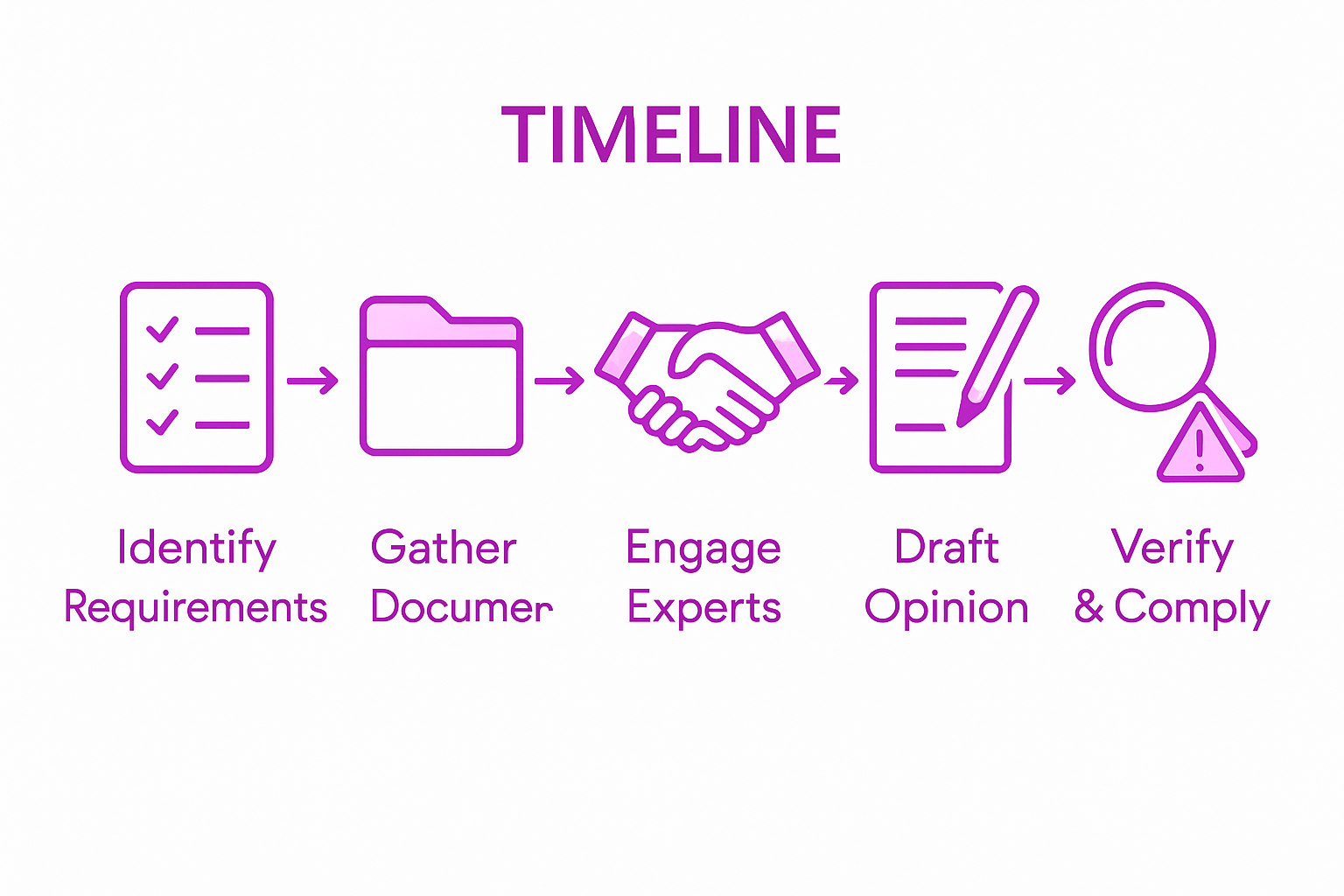
1. Conduct thorough legal analysis | Examine regulatory frameworks in each jurisdiction to understand requirements for licence acquisition effectively. |
2. Compile comprehensive documentation | Gather and authenticate necessary documents to substantiate your business’s compliance across different jurisdictions. |
3. Engage qualified legal experts | Select experienced professionals with a proven track record in international licensing to guide your compliance strategy effectively. |
4. Draft a meticulous legal opinion | Create a cohesive document integrating all gathered information and expert insights to demonstrate legal readiness for licensing. |
5. Verify accuracy of the submission | Implement a thorough review process to ensure all claims in your legal documents are substantiated and compliant with regulations. |
Step 1: Identify legal requirements and objectives
Navigating international licensing demands a strategic approach to understanding your legal landscape. This step involves comprehensively mapping out the regulatory framework that will govern your business operations across different jurisdictions. Your goal is to develop a crystal clear picture of the specific legal prerequisites and strategic objectives required for successful licence acquisition.
To effectively identify legal requirements, you will need to conduct a multilayered analysis that goes beyond surface level research. This involves thoroughly examining regulatory frameworks for professional licensing which often aim to solve complex information asymmetry challenges. Begin by creating a detailed checklist that covers multiple dimensions: jurisdictional legal standards, compliance protocols, documentation requirements, and potential regulatory constraints. Pay special attention to nuanced differences between domestic and international legal expectations, particularly when operating in multiple territories.
A critical warning emerges from international legal practice research recommendations professional due diligence before initiating any licensing process. This means scrutinising not just explicit legal requirements but also understanding implicit regulatory expectations. Consulting with legal experts who specialise in international licensing can provide invaluable insights into navigating potential regulatory complexities. Your next step will involve meticulously documenting these identified requirements to create a comprehensive compliance roadmap.
Step 2: Gather relevant documentation and evidence
Compiling comprehensive documentation represents the backbone of successful international licensing preparation. Your objective in this stage is to systematically collect and organise every piece of evidence that substantiates your business’s legal and operational credibility across different jurisdictional requirements.
The process of gathering documentation requires meticulous attention to detail and strategic planning. International evidence collection presents complex logistical challenges that demand careful navigation through potential cultural and legal barriers. Start by creating a master documentation checklist that includes corporate registration papers, financial statements, compliance certificates, professional qualifications, operational licenses, and detailed business plans. Each document must be authenticated and potentially translated to meet specific jurisdictional standards.
A critical warning emerges when dealing with international documentation verification technical authenticity is paramount. Ensure all documents are notarised, apostilled where necessary, and meet the specific validation requirements of target jurisdictions. Professional translation services and legal consultants who understand cross border documentation protocols can prove invaluable. Your next phase will involve carefully reviewing and cross referencing these gathered documents to ensure absolute compliance and readiness for licensing applications.
Step 3: Engage qualified legal experts
Engaging specialised legal professionals represents a critical milestone in your international licensing journey. Your objective is to secure expert guidance that can navigate the intricate regulatory landscape and provide strategic insights tailored to your specific business requirements.
The process of selecting legal experts demands a strategic and thorough approach. Expert evidence requires rigorous evaluation of professional impartiality and qualifications to ensure credible and authoritative support. Begin by researching legal professionals who specialise in international licensing within your specific industry sector. Look for practitioners with demonstrable experience across multiple jurisdictions, deep understanding of regulatory frameworks, and a proven track record of successful licence acquisitions. Prioritise experts who can provide comprehensive services including regulatory analysis, documentation review, compliance strategy, and ongoing legal support.

A critical warning emerges when selecting legal representation thorough due diligence is paramount. Verify potential legal experts credentials, review their professional references, and conduct detailed consultations to assess their genuine understanding of your business objectives. Request detailed proposals that outline their specific approach to your licensing requirements, potential challenges, and projected timelines. Professional legal experts should offer transparent communication, strategic insights, and a collaborative approach to solving complex regulatory challenges. Your next phase will involve developing a comprehensive legal strategy that leverages these expert insights to maximise your licensing success.
Step 4: Draft and review the legal opinion document
Crafting a comprehensive legal opinion document represents the pivotal moment where your licensing preparation transforms into a formal regulatory submission. Your objective is to synthesise all gathered information, expert insights, and documentary evidence into a cohesive professional narrative that demonstrates your business’s legal readiness and compliance potential.
Knowledge-based legal document assembly requires a systematic approach to integrating professional expertise and regulatory frameworks that goes far beyond simple template completion. Begin by structuring your document with clear sections addressing jurisdictional requirements, regulatory analysis, risk assessments, and specific legal interpretations relevant to your business model. Each section must meticulously reference supporting documentation, expert consultations, and precise legal citations that substantiate your compliance arguments. Ensure the document follows a logical progression that demonstrates thorough understanding of both the letter and spirit of applicable regulations.
A critical warning emerges during the drafting process absolute precision and intellectual rigour are non negotiable. Professional legal opinion documents must balance technical accuracy with clear communication, avoiding ambiguous language or speculative statements. Engage multiple expert reviewers to scrutinise the document, checking for potential inconsistencies, legal vulnerabilities, or interpretative gaps. Your final document should represent a comprehensive yet concise statement of legal conformity that instils confidence in regulatory assessors. The subsequent phase will involve preparing for potential regulatory queries and supplementary information requests.
Step 5: Verify accuracy and compliance outcomes
Verifying the accuracy and compliance of your legal opinion document represents the final critical checkpoint in your international licensing preparation. Your objective is to conduct a comprehensive validation process that scrutinises every aspect of your submission to ensure absolute regulatory alignment and procedural integrity.
International legal compliance verification demands meticulous examination of evidence and documentation standards that goes beyond superficial review. Initiate a systematic cross reference process where each statement in your legal opinion is independently verified against original source documents, expert consultations, and regulatory frameworks. Engage multiple independent reviewers with specialised expertise in your specific industry and target jurisdictions. Develop a detailed verification matrix that tracks every substantive claim against its documentary evidence, highlighting potential discrepancies or areas requiring additional substantiation.
A critical warning emerges during the verification stage undetected inaccuracies can fundamentally compromise your entire licensing submission. Implement a rigorous validation protocol that includes multiple rounds of review, potentially involving external legal experts who can provide an objective third party perspective. Pay particular attention to nuanced interpretative elements that might introduce legal ambiguity or potential regulatory risk. Your verification process should not merely confirm existing documentation but actively seek to identify and resolve potential compliance vulnerabilities. The final outcome should be a legally robust document that demonstrates unequivocal regulatory readiness and professional diligence.
Streamline Your International Licensing Journey with Expert Support
Securing international licences demands navigating complex regulatory landscapes, meticulous documentation, and precise legal opinions as detailed in the “Legal Opinion Process Guide for International Licences”. If you find yourself overwhelmed by compliance verification or drafting thorough legal opinion documents, you are not alone. Challenges such as meeting jurisdictional requirements, ensuring document authenticity, and engaging specialised legal experts create significant hurdles that require expert navigation.
At NUR Legal, we understand these pain points and specialise in delivering tailored solutions for high-risk industries like fintech, crypto, and gambling. Our comprehensive services include fast and affordable Gaming Licensing solutions from Curaçao or Anjouan and trusted crypto licensing services in Georgia and Seychelles. Backed by strong regulator relationships and deep industry expertise, we help you craft legally robust submissions and implement foolproof compliance strategies.
Take control over your licensing process now and gain confidence in regulatory readiness.
Explore how NUR Legal can turn complex legal obstacles into clear, manageable steps. Visit our main website to get started with expert consultancy and secure your licence with precision and speed today.
Frequently Asked Questions
What are the key legal requirements for acquiring an international licence?
To acquire an international licence, you must identify and understand the specific legal requirements for each jurisdiction. Start by creating a detailed checklist that covers documentation needs, compliance protocols, and jurisdictional legal standards.
How do I organise documentation for international licensing?
To organise documentation for international licensing, compile a comprehensive collection of required documents including corporate registration papers, financial statements, and professional qualifications. Create a master checklist to ensure you have all necessary documents authenticated and ready for submission.
Why is it important to engage qualified legal experts during the licensing process?
Engaging qualified legal experts is crucial as they provide specialised guidance through the complex regulatory landscape. Seek professionals who have proven experience in international licensing to help navigate potential challenges and streamline the process.
What should be included in a legal opinion document for licensing?
A legal opinion document should include jurisdictional requirements, regulatory analysis, risk assessments, and clear legal interpretations relevant to your business. Structure it logically and ensure that each section references supporting documentation and expert insights to demonstrate compliance.
How can I verify the accuracy of my legal opinion document?
To verify the accuracy of your legal opinion document, conduct a thorough review aligning each statement with its original source documents and expert consultations. Develop a verification matrix to identify any discrepancies and ensure that all claims are substantiated adequately.
Recommended


Comments