
How to Set Up Offshore Company for Global Compliance


Choosing where to establish an offshore company can feel overwhelming for any European fintech or crypto founder. Each country, from the British Virgin Islands to Hong Kong, demands careful evaluation of regulatory frameworks, corporate governance, and banking accessibility. Understanding these differences is essential for maintaining international compliance and keeping costs manageable. This guide offers a straightforward comparison of top jurisdictions and outlines practical steps to help you build a legally sound, globally recognised business structure.
Table of Contents
Quick Summary
Key Takeaway | Explanation |
1. Assess offshore jurisdictions carefully | Evaluate legal frameworks, tax structures, and governance standards when selecting an offshore jurisdiction for your business. |
2. Prepare comprehensive documentation | Compile essential legal documents, including personal identification and a detailed business plan, to support your offshore company formation. |
3. Engage a licensed formation agent | Choose a reputable agent with expertise in your target jurisdiction to facilitate compliance and smooth incorporation of your offshore company. |
4. Ensure compliance during registration | Address all regulatory requirements and prepare accurate documentation to avoid delays or legal issues during the registration process. |
5. Validate legal status post-registration | Confirm your offshore company’s legal existence and operational readiness to establish credibility in international business transactions. |
Step 1: Assess suitable jurisdictions and regulatory frameworks
Assessing the right offshore jurisdiction is crucial for creating a compliant and strategically positioned global business. This step involves carefully evaluating legal frameworks, regulatory environments, and specific compliance requirements across different international locations.
When selecting an offshore jurisdiction, you must consider multiple critical factors. Offshore jurisdictions vary significantly in their regulatory approaches, tax structures, and international recognition. Key considerations include:
Corporate governance standards
Tax efficiency and transparency
International banking accessibility
Reputation and regulatory stability
Anti-money laundering (AML) frameworks
Economic substance requirements
Top jurisdictions for offshore company formation typically include British Virgin Islands, Cayman Islands, Seychelles, and Hong Kong. Each offers unique advantages depending on your specific business model and compliance needs. For instance, the British Virgin Islands provide robust confidentiality protections, while Singapore offers exceptional regulatory clarity for technology and financial services.
Below is a comparison of leading offshore company jurisdictions and their distinctive regulatory profiles:
Jurisdiction | Regulatory Reputation | Banking Accessibility | Tax Structure |
British Virgin Islands | Strong confidentiality | Wide international options | No corporate tax on offshore profits |
Cayman Islands | Highly recognised | Sophisticated banking sector | Zero direct tax, strict AML controls |
Seychelles | Emerging compliance | Growing international links | Territorial tax regime, flexible rules |
Hong Kong | Excellent transparency | Premier Asian banking hub | Low tax, bilateral treaties available |
Careful analysis requires examining specific legal nuances. You’ll need to review bilateral tax treaties, understand local corporate governance rules, and assess the jurisdiction’s standing in international financial compliance networks.
Professional recommendation: Consult with a specialised legal expert who understands the intricate regulatory landscapes of multiple offshore jurisdictions before making your final selection.
Step 2: Prepare corporate documentation and business plan
Preparing comprehensive corporate documentation and a robust business plan is critical for successful offshore company formation. This step involves assembling essential legal paperwork and crafting a strategic roadmap that demonstrates your business’s viability and compliance potential.
Corporate documentation requirements vary by jurisdiction, but typically encompass several key elements. Essential documents you’ll need to compile include:
Personal identification documents
Certified passport copies
Proof of residential address
Corporate structure details
Memorandum of association
Articles of incorporation
Detailed business plan
Your business plan should provide a comprehensive overview of your company’s objectives, operational strategy, financial projections, and market analysis. A well-constructed plan not only supports your registration process but also demonstrates to regulatory authorities and potential banking partners that your offshore venture is legitimate and strategically sound.
For clarity, here is an overview of documentation types and their business significance:
Document Type | Purpose | Impact on Incorporation |
Certified passport copies | Confirms personal identity | Prevents fraud; regulatory approval |
Memorandum of association | Defines company’s objectives | Shapes legal scope and activities |
Articles of incorporation | Establishes governance | Ensures regulatory compliance |
Business plan | Details strategy and finance | Demonstrates legitimacy to authorities |
When drafting documentation, pay meticulous attention to alignment with the specific regulatory requirements of your chosen offshore jurisdiction. Each location has unique compliance standards, so tailoring your documents precisely is paramount.
A meticulously prepared documentation package can significantly expedite your company registration and establish credibility with financial institutions.
Professional recommendation: Engage a local legal professional who specialises in offshore company formation to review your documentation and ensure absolute compliance with jurisdictional regulations.
Step 3: Engage licensed agents and initiate incorporation
Engaging a licensed corporate formation agent is a critical step in establishing your offshore company, ensuring legal compliance and smooth registration across international jurisdictions. This process involves selecting a reputable professional who understands the intricate regulatory requirements of your chosen offshore location.
Licensed company formation agents provide essential services that streamline your incorporation process. Their responsibilities typically include:
Verifying documentation completeness
Submitting incorporation paperwork
Ensuring regulatory compliance
Providing registered office addresses
Managing initial administrative requirements
Offering ongoing secretarial support
When selecting an agent, prioritise those with demonstrable expertise in your target jurisdiction. Look for professionals with proven track records, transparent fee structures, and comprehensive understanding of local regulatory frameworks. Many reputable offshore jurisdictions now enable fully remote registration, allowing you to complete the process efficiently without physical presence.
A competent licensed agent acts as your strategic partner, navigating complex legal landscapes and mitigating potential compliance risks.
Remember that the quality of your chosen agent can significantly impact the speed and success of your company’s incorporation. Conduct thorough due diligence, request references, and verify their regulatory authorisations before finalising your engagement.

Professional recommendation: Schedule initial consultations with multiple licensed agents to compare their services, understanding their specific expertise in your desired offshore jurisdiction.
Step 4: Register company and fulfil compliance requirements
Registering your offshore company and ensuring comprehensive compliance is the pivotal moment where your strategic planning transforms into legal reality. This critical stage demands meticulous attention to detail and a structured approach to navigating complex regulatory landscapes.
Corporate compliance essentials encompass multiple critical dimensions that require systematic implementation. Your registration and compliance process should address several key areas:
Company registration documentation
Regulatory filing submissions
Tax identification registration
Bank account establishment
Compliance documentation preparation
Initial regulatory reporting requirements
Ongoing statutory obligations
Navigating the registration process requires understanding jurisdiction-specific requirements. Each offshore location has unique protocols, registration timelines, and documentary evidence standards. Your submitted documentation must demonstrate absolute precision, with zero tolerance for administrative errors that could potentially delay or compromise your company’s legal standing.
Successful registration hinges on your ability to provide comprehensive, accurate documentation that meets every jurisdictional regulatory standard.
Prepare comprehensive records of all registration activities, maintaining meticulous documentation trails. This approach not only facilitates smooth initial registration but also establishes a robust foundation for future regulatory interactions and potential audits.
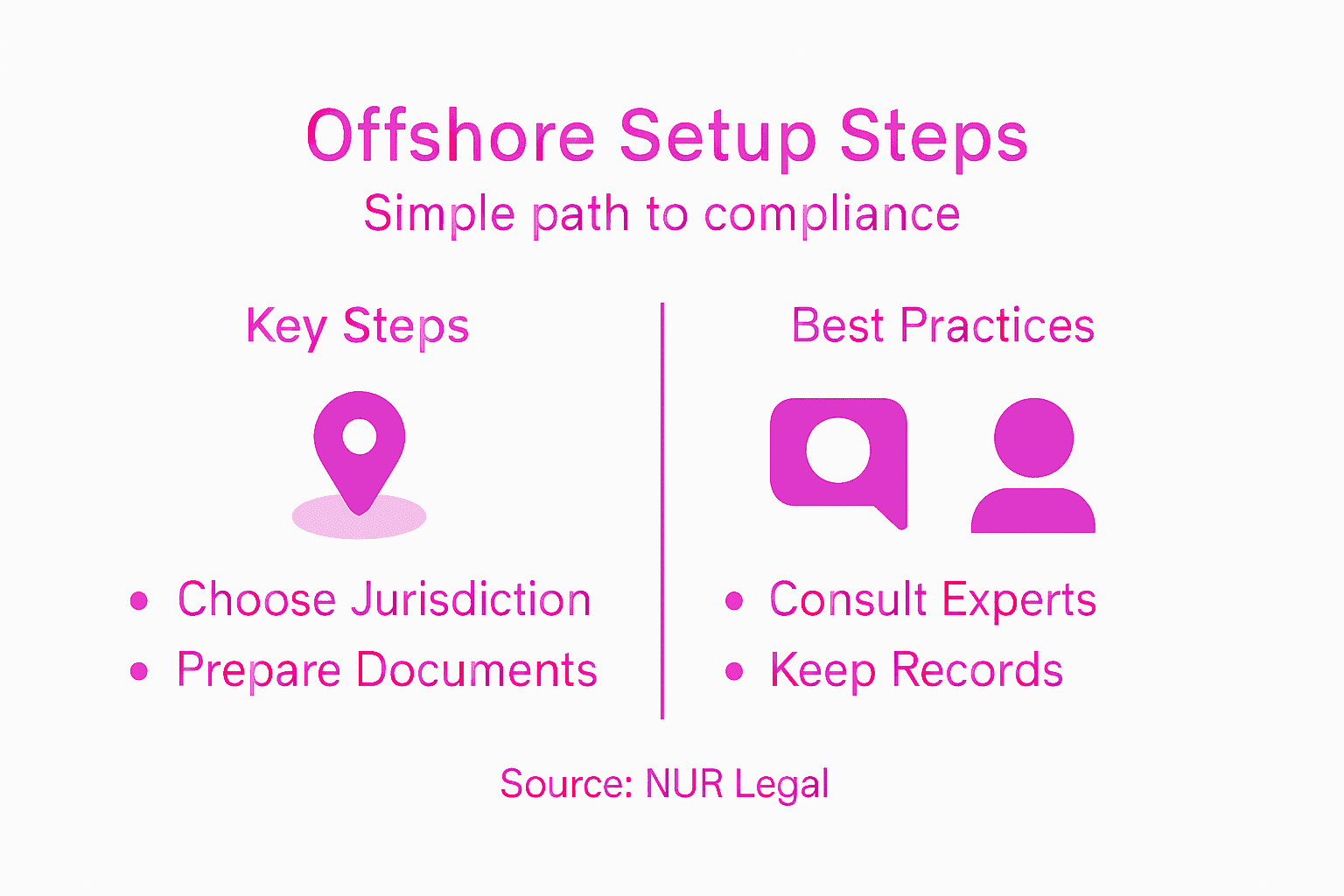
Professional recommendation: Create a dedicated compliance folder containing all registration documents, maintaining digital and physical copies for comprehensive record-keeping and future reference.
Step 5: Verify legal status and operational readiness
Verifying your offshore company’s legal status and operational readiness represents the final validation stage of your international business strategy. This critical phase confirms that your meticulously planned corporate structure can genuinely function within the complex global regulatory landscape.
Legal entity verification systems play a pivotal role in confirming your company’s legitimacy and operational potential. The verification process requires comprehensive assessment across multiple dimensions:
Legal entity identifier validation
Beneficial ownership confirmation
Regulatory compliance documentation
Financial infrastructure readiness
Operational capability assessment
International transaction preparedness
Jurisdictional legal standing verification
Utilising global verification platforms enables you to conduct thorough due diligence. These systems provide authoritative verification of your company’s legal existence, ownership structure, and potential for international financial transactions. Pay particular attention to confirming your entity’s unique identifiers and cross-referencing them with official international registries.
Legal verification is not merely a procedural requirement, but a fundamental safeguard protecting your business’s credibility and operational integrity.
Ensure you maintain comprehensive documentation demonstrating your company’s verified legal status. This approach not only facilitates smoother future transactions but also establishes a robust foundation for potential international business expansion.
Professional recommendation: Systematically archive all verification documentation, creating a digital and physical audit trail that substantiates your company’s legal and operational legitimacy.
Navigate Offshore Company Formation with Expert Legal Support
Setting up an offshore company for global compliance can feel overwhelming with varying regulations, documentation requirements and ongoing compliance needs discussed in the article. You want to avoid costly delays from improper filings, unclear jurisdictional rules or unreliable agents. At NUR Legal, we understand these complex challenges including jurisdictional nuances like corporate governance, AML frameworks and beneficial ownership verification.
Partner with a consultancy specialising in legally compliant company formation and licensing tailored for high-risk and regulated sectors worldwide. Our expert team supports:
Global offshore company formation adapting to your target jurisdictions
Preparation and review of corporate documentation and business plans
Securing gaming, crypto and financial licences rapidly in trusted locations like Curaçao, Georgia and Seychelles
Take control of your offshore setup today by leveraging NUR Legal’s global expertise and trusted relationships with regulators. Visit our main site now to explore comprehensive solutions that ensure strategic compliance and operational readiness. Do not risk your company’s credibility and future. Start your legally sound offshore journey with NUR Legal and achieve your global business ambitions.
Frequently Asked Questions
How do I choose the right offshore jurisdiction for my company?
Selecting the right offshore jurisdiction involves evaluating corporate governance standards, tax efficiency, and the regulatory environment. Start by researching jurisdictions that align with your business model and compliance needs, and consider consulting a legal expert to assist in the selection process.
What documents are required to prepare for offshore company formation?
Key documents for offshore company formation include personal identification, certified passport copies, proof of residential address, and corporate structure details. Compile these documents early to streamline your application process and ensure compliance with jurisdictional requirements.
How can a licensed corporate formation agent assist with registration?
A licensed corporate formation agent helps verify documentation completeness, submit incorporation paperwork, and ensure regulatory compliance. Engage an agent to simplify the registration process and help navigate the complex legal landscape within your chosen jurisdiction.
What steps should I follow to ensure ongoing compliance after registration?
To ensure ongoing compliance, regularly review your company’s regulatory filings, maintain accurate records of financial transactions, and keep up with any changes in local laws. Establish a compliance checklist to track statutory obligations and review it at least quarterly to remain compliant.
How can I verify my offshore company’s legal status?
You can verify your offshore company’s legal status by obtaining a legal entity identifier (LEI) and confirming ownership through official registries. Conduct this verification process promptly to establish credibility and ensure readiness for international transactions, aiming to complete it within a few days.
Recommended


Comments