
Why Legal Support Matters for Startup Success


Regulatory pressures in markets like the European Union and Singapore often leave fintech and crypto founders wondering where to start. As your venture grows, so do the compliance demands and licensing hurdles unique to every jurisdiction. Solid legal support is not simply an afterthought—it shapes investor confidence, shields your innovations, and protects against costly shutdowns. This guide highlights the legal frameworks and proactive strategies you need to operate confidently, safeguarding your business from preventable risks.
Table of Contents
Key Takeaways
Point | Details |
Importance of Legal Support | Startups in fintech and crypto must establish solid legal foundations to operate legally and attract investment. |
Compliance as a Priority | The ever-changing compliance landscape requires proactive strategy and thorough implementation from day one to avoid regulatory issues. |
Licensing Necessities | Understanding and securing the appropriate licences for specific operations is crucial to legally serve customers in various jurisdictions. |
Common Legal Pitfalls | Many startups falter by choosing incorrect business structures or neglecting intellectual property, leading to significant financial risk. |
Defining Legal Support for Startups
Legal support for startups means more than just having a lawyer on speed dial. It encompasses the frameworks, guidance, and structures that allow your fintech or crypto venture to operate legally whilst scaling. Think of it as the scaffolding that keeps your business standing as regulatory pressures mount.
For founders in regulated sectors like fintech and crypto, legal support covers several critical areas. You need assistance with company formation and structuring, intellectual property protection, contract review and negotiation, regulatory compliance across jurisdictions, and navigating employment law. When building a crypto exchange or fintech platform, each of these components directly impacts whether you can legally operate.
Providing appropriate legal frameworks enables new ventures to innovate and grow whilst managing legal complexities efficiently. Without proper legal groundwork, startups waste resources fighting preventable disputes and regulatory violations that could derail fundraising or market entry.
The reality for crypto and fintech founders is straightforward: your business cannot succeed without solid legal foundations. Whether you’re launching a decentralised finance protocol, a payment system, or a tokenised asset platform, regulators require documented compliance measures and clear legal structures. Startups that skip this step face licence rejections, operational shutdowns, and investor scepticism.
Effective legal support establishes investor confidence through transparent governance structures and demonstrated regulatory awareness. When institutional investors evaluate your startup, they examine your legal compliance posture first. A well-documented legal position signals maturity and reduces their risk perception.
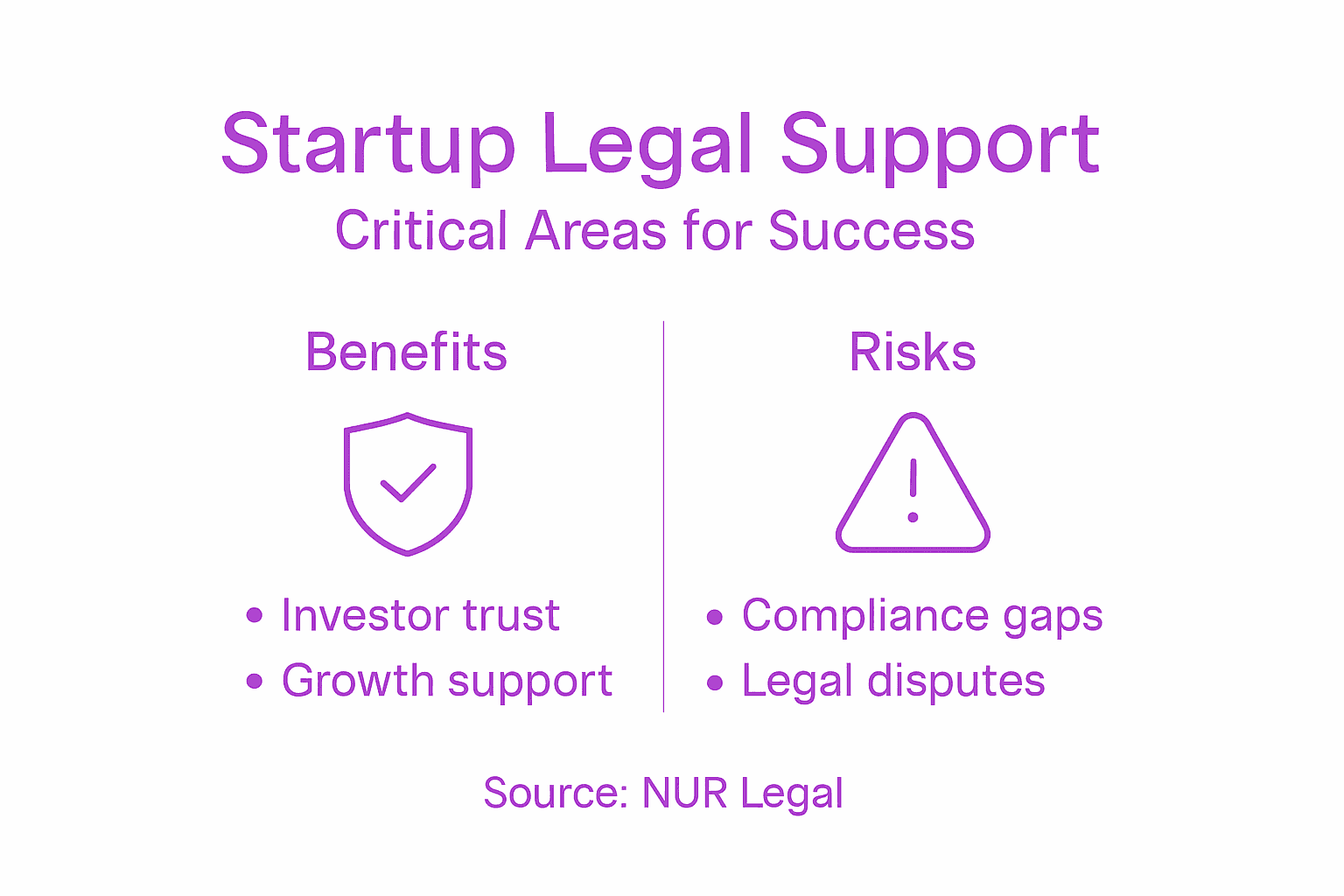
Your immediate priority involves understanding what legal support your specific business model requires. This varies dramatically between a blockchain infrastructure company and a licensed payment provider. Securing intellectual property rights and meeting employment compliance standards protects your innovations whilst ensuring you operate within legal boundaries.
Here’s a summary of critical legal support areas relevant for fintech and crypto founders:
Legal Area | Typical Activities | Impact on Startup Success |
Company Structuring | Choosing legal entity, tax planning | Shields personal assets, eases fundraising |
Intellectual Property | Patent application, IP contracts | Protects innovations, boosts valuation |
Contract Management | Drafting, negotiation | Reduces disputes, clarifies obligations |
Regulatory Compliance | Licence applications, audits | Enables market access, avoids shutdown |
Employment Law | Staff contracts, compliance audits | Retains talent, prevents legal claims |
Pro tip: Determine your regulatory classification before investing heavily in product development—define whether you need banking licenses, gambling licenses, or crypto asset service provider registration in your target jurisdictions, as this shapes your entire legal roadmap.
Navigating Regulated Market Compliance Issues
Compliance in fintech and crypto isn’t something you bolt on after launching. It’s the foundation that determines whether regulators allow you to operate at all. For startups in these sectors, the compliance landscape shifts constantly across jurisdictions, and missing deadlines or requirements can trigger licence denials, operational freezes, or substantial fines.
The challenge stems from fragmentation across markets. A token you can issue in El Salvador faces entirely different restrictions in the European Union or Singapore. Your crypto trading platform must satisfy Anti-Money Laundering and Know-Your-Customer requirements that vary by country, whilst your payment processing system requires banking oversight in some jurisdictions but not others. This complexity demands a proactive strategy rather than reactive scrambling.
Implementing thorough compliance programmes including data protection and staff training mitigates operational risk significantly. Startups that wait until receiving a regulatory inquiry to address compliance typically face expensive remediation efforts. Building compliance infrastructure from day one costs less than retrofitting it later.
Regulatory technology solutions automate much of this burden. Rather than manual spreadsheet tracking, modern compliance tools monitor evolving regulations in your jurisdictions and flag changes automatically. They document your adherence for audits and demonstrate to regulators that you take obligations seriously.
Embracing a compliance first organisational culture means every team member understands how their work intersects with regulatory requirements. Your developers need to grasp data residency rules. Your marketing team must understand advertising restrictions in each market. Your customer service staff require training on suspicious activity reporting.
Engage legal and compliance experts before you launch, not after problems surface. These professionals map your specific regulatory obligations across target markets, identify gaps in your current approach, and create roadmaps for achieving compliance. Early engagement saves far more than the cost of expert advice.
Pro tip: Map your compliance requirements by jurisdiction before finalising your product roadmap—this prevents costly pivots later and ensures your technology architecture supports the compliance controls regulators expect.
Licensing Needs in High-Risk Industries
Licensing separates legitimate fintech and crypto operations from those operating in legal grey zones. Your crypto exchange, payment processor, or blockchain-based lending platform cannot legally serve customers in most jurisdictions without proper licences. Regulators treat unlicensed operations as threats, shutting them down and seizing assets regardless of your intentions.
The licensing landscape in fintech and crypto is fragmented by design. You need different licences depending on what you do. A crypto custodian requires different authorisation than a cryptocurrency exchange operator. A stablecoin issuer faces different requirements than a decentralised finance protocol. This complexity means understanding your specific regulatory classification comes before everything else.
For reference, here is how licensing needs vary across high-risk fintech and crypto business models:
Business Model | Licence Type Required | Typical Processing Time | Regulatory Risk Level |
Crypto Exchange | Crypto asset service licence | 6-18 months in EU | High |
Payment Processor | Payment institution licence | 3-12 months globally | Moderate |
DeFi Protocol | No standard licence (yet) | Case-by-case | Emerging, variable |
Stablecoin Issuer | E-money or specialised licence | 6-24 months | High |
Crypto Custodian | Custody or trust licence | 4-12 months | High |
Risk-based, streamlined licensing processes balance public protection with operational efficiency. Modern regulators recognise that bureaucratic delays harm innovation unnecessarily. Yet this doesn’t mean approvals come quickly. Jurisdictions like Georgia and Seychelles streamline crypto licensing within weeks, whilst European Union jurisdictions require months or years of preparation.
Licensing timelines demand strategic planning. Applications require comprehensive documentation proving your compliance framework, staff qualifications, capital reserves, and anti-fraud measures. Starting this process six months before your intended launch gives you breathing room. Starting three weeks before creates operational pressure that leads to rejected applications or rushed implementations that fail regulatory scrutiny.
Effective licensing management involves assessing risks in agreements and leveraging licences to attract investment. Investors view licensing status as fundamental due diligence. A startup with provisional approval carries more risk than one with granted licences. This directly affects your fundraising prospects and valuation.
Mismanagement creates cascading problems. Applying in the wrong jurisdiction wastes months. Submitting incomplete applications causes rejections requiring resubmission. Operating without proper licensure invites regulatory enforcement. Each scenario drains resources you need for product development and customer acquisition.
Pro tip: Engage licensing specialists at your company formation stage, not after building your product, since regulatory requirements often dictate your technology architecture and business model.
Managing Legal Risks and Liabilities
Your fintech or crypto startup operates in an environment where a single legal misstep creates existential threats. Unmanaged legal risks compound quickly. A contract dispute with a payment processor cascades into operational shutdowns. A missed compliance deadline triggers regulatory enforcement. An employment dispute becomes a public relations disaster that scares investors away.

The core of legal risk management involves identifying threats before they materialise. For crypto and fintech founders, this means protecting intellectual property in your blockchain technology or trading algorithms, ensuring regulatory compliance across all jurisdictions where you operate, maintaining clear contractual relationships with partners and vendors, and adhering strictly to employment laws. Each category requires different expertise and ongoing attention.
Proactive identification of legal risks and employing legal counsel for complex issues protects your business continuity. You cannot realistically anticipate every legal problem yourself. Attempting to do so leaves gaps that regulators and competitors exploit. Early legal counsel identifies structural weaknesses in your contracts, highlights compliance gaps in your operations, and flags intellectual property vulnerabilities before they become problems.
Internal compliance programmes document your adherence to regulations and create audit trails regulators expect. These programmes are not bureaucratic overhead. They demonstrate to regulators that your startup takes obligations seriously. They provide evidence of good faith efforts if disputes arise. They protect you during regulatory inspections by showing systematic compliance rather than ad hoc compliance.
An integrated approach combining risk identification, mitigation strategies, and compliance adherence strengthens your resilience. Preventive controls stop problems before they start. Audit mechanisms detect issues early. Insurance strategies transfer certain risks to third parties. Crisis management planning ensures you respond effectively if disputes occur anyway.
Dispute resolution mechanisms matter more than you realise. Litigation in crypto disputes costs hundreds of thousands in legal fees. Arbitration clauses in your contracts can reduce this burden significantly. Clear dispute procedures with payment processors, investors, and partners prevent conflicts from spiralling into courtroom battles.
Pro tip: Establish your legal risk management framework alongside your product roadmap, not months into operations, since contractual obligations and compliance requirements affect technology decisions from day one.
Common Pitfalls and Costly Legal Mistakes
Fintech and crypto startups repeat predictable legal mistakes that derail otherwise promising ventures. These errors stem not from malice but from underestimating legal complexity and operating under tight timelines and budget constraints. Understanding these pitfalls helps you avoid them entirely.
The first critical mistake involves choosing the wrong business structure. Many founders incorporate hastily without considering tax implications, liability exposure, or regulatory requirements specific to their jurisdiction. A sole proprietorship or standard limited company might work for a Software as a Service startup but exposes crypto or fintech founders to personal liability if regulatory enforcement occurs. Establishing the proper business structure early prevents personal assets from being seized if your company faces regulatory action.
Ignoring intellectual property protection creates another expensive problem. Founders develop proprietary blockchain architecture, trading algorithms, or fraud detection systems without securing patents or establishing clear ownership documentation. When investors conduct due diligence, they discover IP vulnerabilities that trigger valuation discounts or deal terminations. Securing these rights promptly protects your competitive advantage and increases company value substantially.
Ignoring proper contract formation and inadequate intellectual property management frequently combine into devastating problems. Handshake agreements with co-founders, investors, or service providers create disputes about rights and responsibilities. A casual conversation about equity allocation becomes a costly court battle when disagreement emerges. Written contracts document everyone’s expectations and provide clear dispute resolution mechanisms.
Noncompliance with industry regulations represents the costliest mistake. Startups often launch products before securing necessary licences or implementing compliance frameworks. Regulators shut down unlicensed operations and sometimes pursue criminal charges against founders. This fate awaits crypto exchanges operating without proper authorisation or fintech platforms lacking payment institution licences.
Making disjointed legal and financial decisions creates compounding problems. Your tax structure should align with your regulatory classification. Your employment contracts should reflect your jurisdiction’s labour laws. Your investor agreements should address regulatory risks specific to your industry. When these decisions operate independently, conflicts emerge that become expensive to resolve.
Pro tip: Engage legal counsel during company formation, not after launching, so your corporate structure, IP strategy, and regulatory roadmap align from the beginning rather than requiring costly restructuring.
Secure Your Startup’s Future with Expert Legal Support
Building a fintech or crypto startup means facing complex challenges in licensing, compliance, and risk management. This article highlights how critical it is to establish sturdy legal foundations from day one — whether for company structuring, intellectual property protection, or navigating varied regulatory landscapes. Without tailored legal support, startups risk costly delays, licence rejections, and operational shutdowns.
At NUR Legal, we specialise in guiding high-risk and regulated ventures through these exact hurdles. From securing fast and affordable licences in jurisdictions like Georgia, Seychelles, Curaçao, and Anjouan to providing bespoke contract reviews and compliance strategies, we transform complexity into clarity. Our transparent process and global reach ensure your startup meets all regulatory demands efficiently and confidently.
Benefit from our trusted licensing services for crypto and gaming industries
Protect your innovations with expert legal opinions and company formation support
Navigate compliance seamlessly with dedicated expert advice
Take the vital step to safeguard your startup’s success today. Explore our comprehensive services at NUR Legal and discover how our proven expertise can keep your operations compliant and investor-ready.
Ready to turn legal uncertainty into your competitive advantage Visit NUR Legal now to start your compliance journey with specialists who understand your industry inside out.
Frequently Asked Questions
What is legal support for startups?
Legal support for startups encompasses the frameworks, guidance, and structures that allow a business to operate legally while scaling, including assistance with company formation, intellectual property protection, contract negotiation, regulatory compliance, and employment law.
Why is compliance important for fintech and crypto startups?
Compliance is crucial for fintech and crypto startups because it determines whether regulators will allow them to operate. A lack of compliance can result in licence denials, operational shutdowns, and substantial fines, making it essential to address compliance from day one.
How can startups identify their regulatory classification?
Startups can identify their regulatory classification by thoroughly assessing their business model and understanding the specific licences and compliance requirements needed for their operations. Engaging legal and compliance experts during the formation stage can provide clarity and guidance.
What are common legal mistakes startups should avoid?
Common legal mistakes include choosing the wrong business structure, neglecting intellectual property protection, ignoring proper contract formation, and launching without necessary licences. Being mindful of these pitfalls helps avoid costly setbacks.
Recommended


Comments