
Master the Legal Opinion Workflow for Regulated Sectors


More than 60 percent of british organisations report facing significant challenges when interpreting new regulations each year. Getting your legal strategy right is crucial, particularly when compliance rules shift faster than most teams can keep up. This guide breaks down the practical steps to help british businesses transform complex laws into clear, actionable practices while avoiding costly compliance pitfalls.
Table of Contents
Quick Summary
Key Point | Explanation |
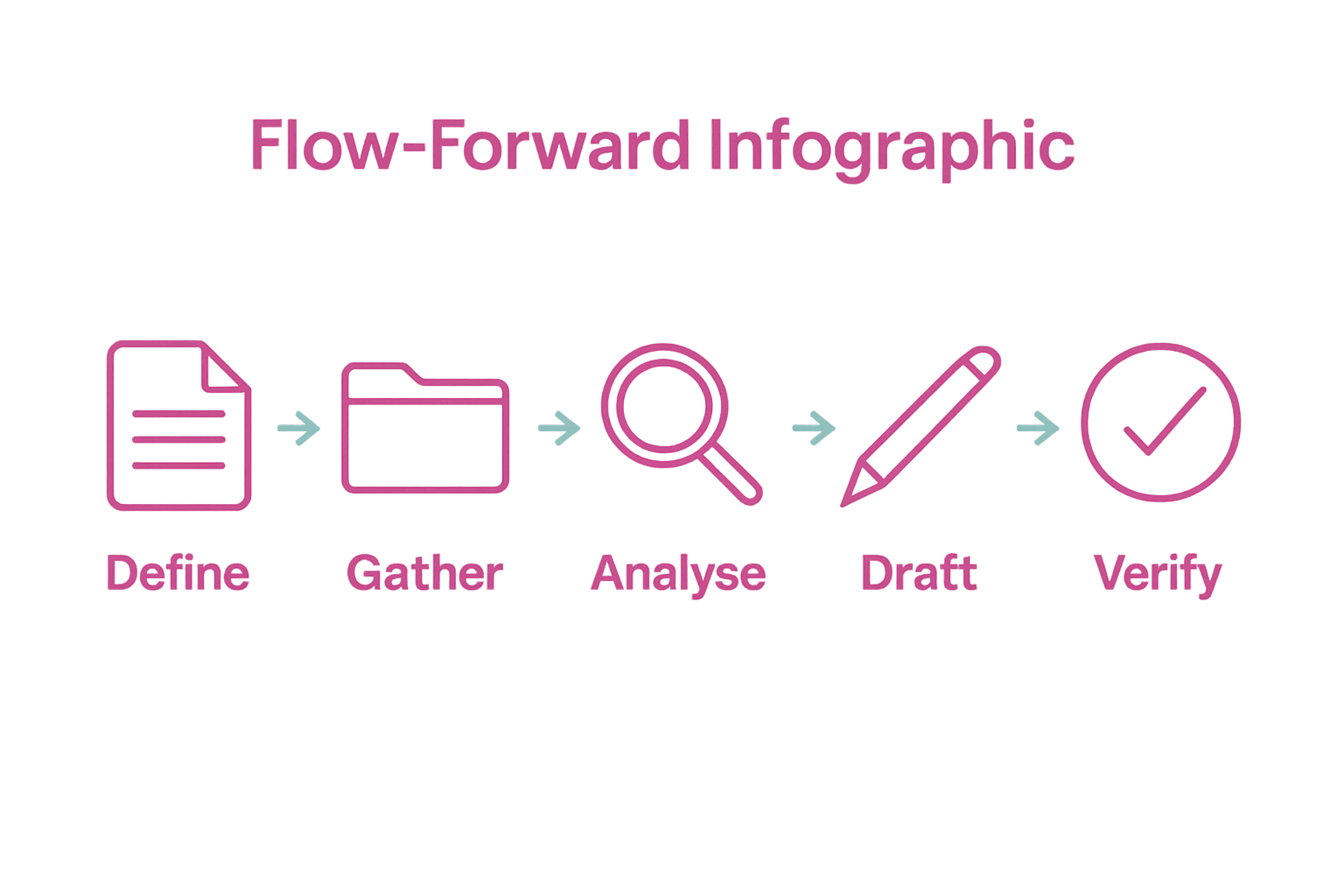
1. Define legal requirements clearly | Conduct a thorough review of relevant laws to establish operational standards that align with your organisational objectives. |
2. Collect and organise documentation | Systematically gather all necessary legal documents to create a transparent framework supporting compliance and regulatory interactions. |
3. Analyse laws for actionable insights | Transform complex legal texts into practical compliance strategies by identifying applicable regulations and their implications for your organisation. |
4. Draft a clear legal opinion | Structure your legal opinion logically, ensuring clarity and precision in presenting your findings and recommendations. |
5. Verify accuracy through rigorous checks | Conduct a detailed verification process, cross-referencing your opinion with regulations and seeking expert feedback to ensure compliance. |
Step 1: Define the Legal Requirements and Objectives
Successfully navigating legal compliance begins with meticulously defining organisational legal requirements through systematic analysis and comprehensive interpretation. This crucial stage establishes the foundational understanding that will guide your entire regulatory strategy.
To craft a robust legal requirements framework, start by conducting an exhaustive review of relevant legislative texts and regulatory guidelines specific to your industry. Your goal is to translate complex legal language into actionable operational standards. This process involves carefully interpreting legal texts to determine precise applicability and aligning your organisational objectives with legislative mandates.
Be aware that legal requirement definition is not a one-time task but an ongoing process. Regulations evolve, and your interpretation must remain flexible yet precise. Develop a systematic approach that includes regular reviews, expert consultations, and continuous monitoring of regulatory shifts in your sector. This proactive stance will help you maintain compliance and anticipate potential legal challenges before they emerge.
Once you have defined your legal requirements, you are ready to progress to the next critical phase of your regulatory compliance journey.
Step 2: Gather Essential Documentation and Data
In this critical phase, you will systematically collect and organise the foundational documentation required for your legal compliance journey. Workflow documentation practices are essential for creating a comprehensive and transparent regulatory framework that supports your organisational objectives.
Start by identifying and compiling all relevant legal documents specific to your industry and operational jurisdiction. This comprehensive collection should include regulatory guidelines, licensing requirements, compliance frameworks, and historical records. Documenting workflows with precision ensures that you create an audit trail, prevent knowledge fragmentation, and establish a clear reference point for future regulatory interactions. Prioritise documents that demonstrate your organisation’s commitment to legal standards, such as previous compliance reports, internal policy documents, and external regulatory correspondence.

Pro tip: Create a master digital repository with version control and secure backup. This approach prevents document loss and enables quick retrieval during audits or regulatory reviews. Each document should be clearly labelled, dated, and cross-referenced to support efficient information management.
With your documentation systematically gathered, you are now prepared to move forward to the next crucial stage of your legal compliance strategy.
Step 3: Analyse Relevant Laws and Regulatory Frameworks
This crucial step involves diving deep into the intricate world of legal interpretation, where you will transform complex regulatory language into actionable insights for your organisation. Understanding how to interpret legal texts requires a systematic approach that goes beyond surface level reading and demands meticulous attention to nuanced regulatory details.
Begin by mapping out the comprehensive landscape of applicable laws, creating a structured framework that systematically dissects legal constructs and their potential implications. Your analysis should focus on identifying specific clauses, understanding jurisdictional variations, and recognising potential intersections between different regulatory requirements. Pay special attention to how these laws might interact with your specific operational context, looking for both direct mandates and potential interpretative grey areas that could impact your compliance strategy.
Pro tip: Consider engaging a legal expert for complex regulatory frameworks. A professional can help you navigate intricate legal language and provide insights that might not be immediately apparent through independent research. This collaborative approach ensures a more robust and nuanced understanding of your regulatory obligations.
With a comprehensive analysis of legal frameworks completed, you are now prepared to translate these insights into practical compliance strategies.
Step 4: Draft and Review the Legal Opinion
This critical stage transforms your comprehensive research and analysis into a precise, authoritative legal document that will serve as a definitive guide for your organisation. Drafting legal documents requires exceptional clarity and meticulous attention to grammatical precision to ensure every nuance of your legal interpretation is communicated effectively.
Begin by structuring your legal opinion with a logical framework that systematically addresses legal problems through targeted research and sophisticated writing techniques. Your document should include a comprehensive introduction outlining the legal context, a detailed analysis of relevant regulations, specific findings, and well reasoned recommendations. Ensure each section flows seamlessly, using precise language that leaves no room for ambiguity. Pay particular attention to referencing specific legal statutes, explaining their applicability, and providing clear rationale for your interpretative conclusions.
Pro tip: Always conduct multiple review cycles. Your first draft is rarely your final document. Engage colleagues or external legal experts to provide critical feedback, looking for potential logical gaps, unclear reasoning, or areas that require further substantiation. A rigorous review process transforms a good legal opinion into an exceptional one.
With your meticulously drafted and reviewed legal opinion complete, you are now prepared to implement its strategic insights.
Step 5: Verify Opinion Accuracy and Compliance
This crucial verification stage transforms your legal opinion from a draft document into a validated, authoritative resource that withstands rigorous professional scrutiny. The document development process requires meticulous review to ensure comprehensive accuracy and alignment with relevant standards across every aspect of your legal analysis.
Initiate a systematic verification process that employs detailed documentation practices to enhance precision and compliance. Cross reference each section of your legal opinion against original source materials, regulatory guidelines, and recent legal precedents. Conduct a comprehensive line by line review, scrutinising every statement for factual accuracy, logical consistency, and regulatory alignment. Pay special attention to jurisdictional nuances, checking that your interpretations reflect the most current legal frameworks and account for potential variations in regulatory interpretation.
Pro tip: Create a verification checklist that includes specific compliance checkpoints. This structured approach ensures no critical element is overlooked during your review process. Consider engaging an independent legal expert who can provide an objective assessment and identify potential blind spots in your analysis.
With your legal opinion thoroughly verified and validated, you are now prepared to present your comprehensive regulatory insights.
Master Your Legal Opinion Workflow with Expert Support
Navigating the complex steps of defining legal requirements, gathering documentation, analysing laws, drafting precise legal opinions and verifying compliance can be overwhelming. This article highlights the essential challenges that regulated sectors face to remain accurate and fully compliant in a rapidly evolving legal landscape. Common pain points include interpreting intricate regulations, maintaining thorough documentation practices and ensuring that legal opinions withstand close professional scrutiny.
NUR Legal specialises in offering tailored legal consultancy solutions that directly address these challenges. Our expertise in corporate compliance, licensing and legal document services for high-risk sectors such as fintech, crypto and gambling means you gain a trusted partner to translate complex legal frameworks into clear, actionable strategies. Benefit from our proven track record in securing industry licences like crypto approvals in Georgia and Seychelles and gaming licences in Curaçao or Anjouan.
Secure your compliance with ease and confidence by partnering with NUR Legal.
Act now to simplify your legal opinion process
Explore how our comprehensive services can support your regulatory journey. Visit NUR Legal today to start building legally compliant operations in challenging markets worldwide. Discover expert legal opinions and licensing solutions designed to protect your business and accelerate growth. Don’t leave your compliance to chance – let us help you master the workflow with professionalism and efficiency.
Frequently Asked Questions
What are the first steps in the legal opinion workflow for regulated sectors?
To start, you must define the legal requirements and organisational objectives relevant to your industry. Conduct a thorough review of legislative texts and regulatory guidelines, ensuring to translate complex legal language into actionable standards.
How can I gather the essential documentation for creating a legal opinion?
Begin by identifying and compiling all relevant legal documents, including regulatory guidelines and compliance frameworks. Organise this information in a master digital repository, clearly labelled and backed up to ensure easy access during reviews or audits.
What techniques can I use to analyse relevant laws and regulatory frameworks effectively?
Use a structured approach to map out applicable laws, focusing on specific clauses and jurisdictional variations. This systematic dissection will assist in determining how these regulations interact with your operations, identifying potential challenges in compliance.
How can I ensure my legal opinion document is clear and precise?
Draft your legal opinion with a logical structure that addresses key legal problems while maintaining clarity. Conduct multiple review cycles, and involve colleagues or legal experts to provide feedback, ensuring any ambiguities are resolved before finalisation.
What steps should I take to verify the accuracy of my legal opinion?
Implement a thorough verification process by cross-referencing your legal opinion against original source materials and regulatory guidelines. Create a verification checklist that includes compliance checkpoints to ensure a comprehensive review of your document.
How often should I review and update my legal requirements?
Regularly review your legal requirements to keep them aligned with evolving regulations. Schedule these reviews at least quarterly to mitigate the risk of non-compliance as legal frameworks change.
Recommended


Comments