
Legal Opinions in Licensing – Why They Matter


Every British fintech and crypto startup aiming to launch in Europe faces a critical licensing hurdle that cannot be ignored. Regulatory bodies may reject applications without a meticulously drafted legal opinion, making these documents essential for compliance officers and legal advisors. With over 60 percent of licence denials linked to inadequate regulatory proof, understanding how legal opinions underpin successful licensing gives your team a strategic edge and minimizes risk across multiple jurisdictions.
Table of Contents
Key Takeaways
Point | Details |
Importance of Legal Opinions | Legal opinions provide critical insights into licensing agreements, clarifying legal implications and compliance considerations for organisations. |
Types of Legal Opinions | Different categories of legal opinions, such as counsel, intellectual property, and compliance opinions, cater to specific licensing challenges. |
Drafting Process | A systematic drafting process is essential for ensuring legal opinions are clear, precise, and address all relevant legal issues. |
Risks and Liabilities | Organisations must diligently identify and mitigate potential legal risks associated with licensing agreements to avoid significant financial exposure. |
Defining legal opinions in licensing
A legal opinion represents a professional interpretation of legal principles applied to a specific licensing scenario, providing authoritative guidance on complex regulatory requirements. These written documents offer detailed analysis of legal implications, potential risks, and compliance considerations for organisations seeking licensing across different jurisdictions. Legal opinions serve as critical tools for businesses navigating intricate regulatory landscapes.
In the context of licensing, legal opinions provide comprehensive insights by clarifying legal principles and potential interpretations that might impact licensing agreements. They typically encompass detailed examinations of relevant legal frameworks, potential regulatory challenges, and strategic recommendations for organisations seeking to obtain or maintain specific licences. Legal professionals draft these documents after meticulously reviewing applicable laws, precedents, and specific transactional contexts.
The primary components of a robust legal opinion include a thorough assessment of factual circumstances, identification of pertinent legal issues, rigorous analysis of applicable regulations, and clear conclusions regarding potential legal implications. Legal opinions are particularly crucial in high-risk sectors such as financial technology, cryptocurrency, and international licensing, where regulatory nuances can significantly impact operational strategies. By providing structured professional insights, these documents help organisations make informed decisions and mitigate potential legal risks.

Pro tip: When seeking a legal opinion, always request a comprehensive document that not only identifies potential legal challenges but also provides strategic recommendations for navigating complex regulatory environments.
Types of legal opinions for licensing
Licensing legal opinions encompass several distinct categories, each serving specific strategic purposes for organisations navigating complex regulatory environments. These types range from counsel opinions to jurisdictional assessments, providing tailored insights into legal frameworks and potential compliance challenges. Formal legal opinions from authoritative bodies typically address critical aspects of licensing agreements, including intellectual property rights, regulatory compliance, and potential legal risks.
The primary classifications of legal opinions in licensing include counsel opinions, which evaluate the validity and enforceability of licensing agreements; intellectual property opinions, which analyse the scope and protection of proprietary rights; and international licensing opinions that examine cross-border legal implications. Organisations often require comprehensive legal interpretations from recognised legal authorities that provide detailed guidance on specific licensing challenges, particularly in high-risk sectors such as financial technology, gambling, and cryptocurrency.
Specific types of legal opinions frequently encountered in licensing contexts include validity opinions, which confirm the legal standing of agreements; enforceability opinions, which assess the potential legal implementation of licensing terms; and compliance opinions that evaluate alignment with regulatory requirements. These professional assessments help organisations mitigate potential legal risks, understand complex regulatory landscapes, and make informed strategic decisions about licensing opportunities.
Here’s a summary of key types of legal opinions relevant to licensing scenarios:
Type of Legal Opinion | Primary Focus | Typical Use Case | Sector Example |
Counsel Opinion | Validity & enforceability | Assessing agreement strength | Financial technology |
Intellectual Property Opinion | Proprietary rights analysis | Protecting trademarks & patents | Software licensing |
International Licensing Opinion | Cross-border implications | Handling multi-jurisdictional licences | Cryptocurrency exchanges |
Compliance Opinion | Regulatory alignment | Ensuring regulatory conformity | Online gambling |
Validity Opinion | Legal standing confirmation | Verifying licencing authenticity | Pharmaceuticals |
Enforceability Opinion | Implementation assessment | Predicting enforceable terms | Insurance licensing |
Pro tip: When requesting a legal opinion, specify the exact scope and context required to ensure you receive a precise and comprehensive assessment of your specific licensing challenges.
Legal frameworks guiding opinion issuance
Legal frameworks for opinion issuance represent a complex network of international and national regulations that establish rigorous standards for professional legal documentation. These frameworks ensure that legal opinions maintain high levels of integrity, objectivity, and technical precision across different jurisdictional contexts. International legal standards safeguard the fundamental principles governing professional legal interpretations, creating a structured approach to developing authoritative guidance for licensing and regulatory compliance.
The primary components of these legal frameworks include comprehensive guidelines that define the scope, methodology, and ethical requirements for issuing professional legal opinions. Such frameworks typically incorporate detailed provisions addressing professional conduct, conflict of interest management, and the technical requirements for documenting legal interpretations. Regulatory bodies across various jurisdictions establish specific criteria that legal professionals must follow, including requirements for thorough research, balanced analysis, and clear documentation of legal reasoning.
International legal frameworks also play a crucial role in standardising legal opinion processes, particularly in complex domains such as cross-border licensing, intellectual property rights, and regulatory compliance. These frameworks create mechanisms for ensuring consistency, reliability, and professional standards across different legal systems, helping organisations navigate complex regulatory environments with greater confidence and clarity. By establishing clear guidelines and expectations, these frameworks help mitigate potential risks and promote transparent, well-reasoned legal assessments.
Pro tip: Always verify that legal opinions are prepared in strict accordance with established international frameworks to ensure maximum reliability and professional credibility.
Essential elements and drafting process
The drafting of legal opinions for licensing requires a meticulously structured approach that combines technical precision with comprehensive legal analysis. Legal drafting involves a systematic process of identifying critical legal issues and presenting them with clarity and logical reasoning, ensuring that each legal opinion provides actionable and authoritative guidance for organisations navigating complex regulatory landscapes.
The essential elements of a robust legal opinion typically include several key components: a detailed policy background, comprehensive factual context, thorough legal analysis, identification of potential legal risks, and clear, definitive conclusions. Professional legal drafters must navigate intricate requirements, maintaining coherence and simplicity while avoiding ambiguity in their documentation. This process demands extensive research, careful consideration of jurisdictional nuances, and the ability to synthesise complex legal principles into accessible and precise language.
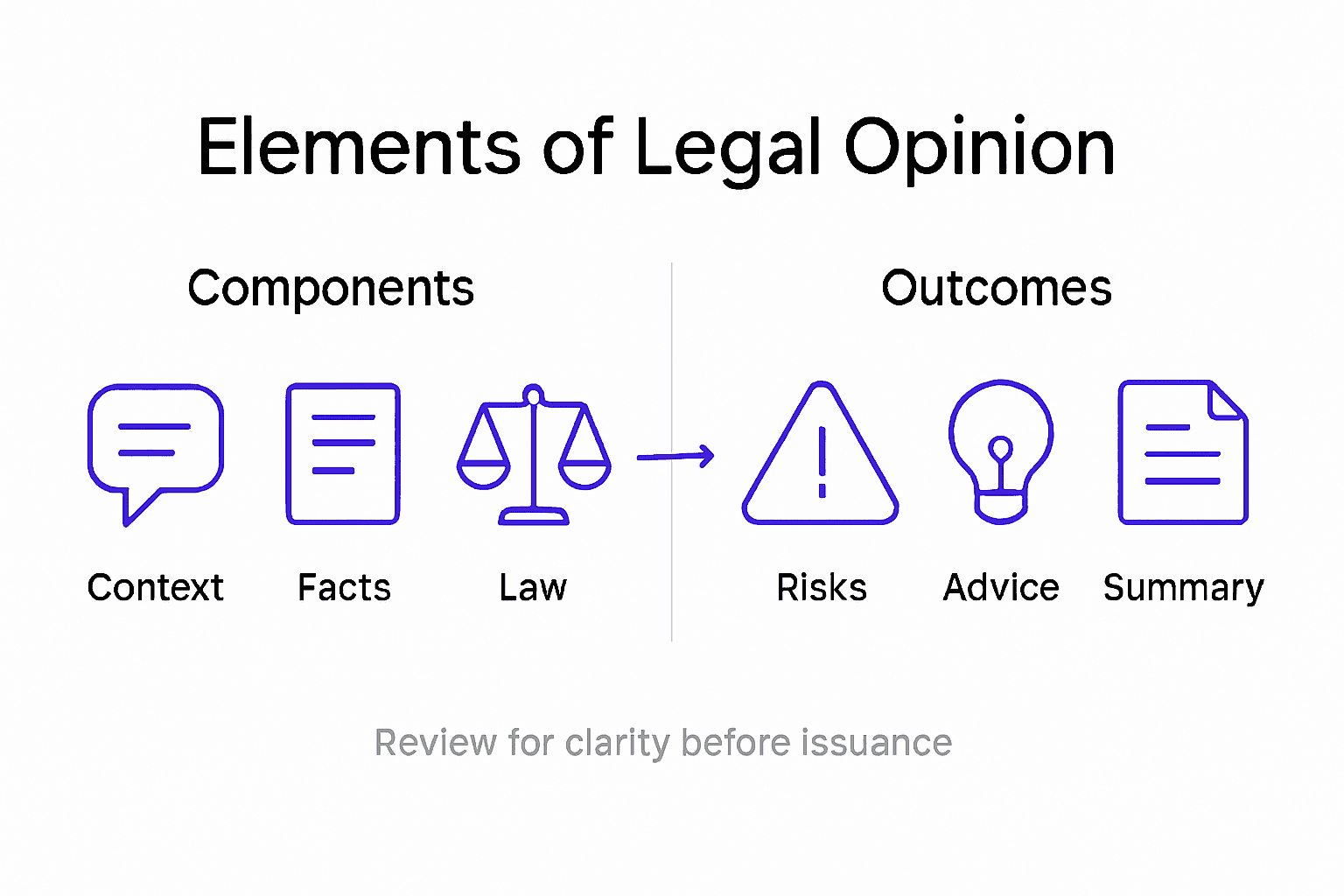
The drafting process itself follows a structured methodology that begins with comprehensive research and culminates in a meticulously reviewed document. Legal professionals typically engage in multiple drafting iterations, critically evaluating each section for logical consistency, legal accuracy, and clarity of expression. This approach ensures that the final legal opinion provides a comprehensive assessment of licensing-related legal challenges, addressing potential counterarguments and providing strategic insights that can guide organisational decision-making.
Pro tip: Develop a standardised internal review checklist to ensure every legal opinion undergoes rigorous scrutiny for accuracy, clarity, and comprehensive legal analysis.
Risks, liabilities and common pitfalls
Legal opinions in licensing encompass a complex landscape of potential risks and liabilities that demand meticulous attention and strategic foresight. Licensing agreements frequently present significant legal challenges arising from unclear terms, excessive restrictions, and potential unenforceable clauses. These legal vulnerabilities can expose organisations to substantial financial and regulatory risks if not carefully managed and comprehensively addressed.
The most prevalent risks in licensing legal opinions typically emerge from several critical domains. These include inadequate representation of potential liabilities, failure to anticipate technological or regulatory changes, and overlooking critical user rights. Organisations must be particularly vigilant about licence terms that might create long-term legal exposure, especially regarding privacy, data security, and evolving legal standards. Common pitfalls often involve over-reliance on licence provisions without considering broader statutory implications, which can create significant legal vulnerabilities for businesses operating in complex regulatory environments.
Navigating these risks requires a proactive and comprehensive approach to legal opinion drafting. Legal professionals must develop robust mechanisms for identifying potential legal vulnerabilities, conducting thorough risk assessments, and creating flexible frameworks that can adapt to changing regulatory landscapes. This demands not just technical legal expertise, but also strategic foresight and a deep understanding of industry-specific regulatory challenges. Successful risk mitigation involves continuous monitoring, periodic review of licensing agreements, and a willingness to adapt legal frameworks in response to emerging regulatory developments.
Pro tip: Implement a systematic risk assessment protocol that includes regular reviews of licensing agreements and proactive identification of potential legal vulnerabilities before they become critical issues.
Comparing legal opinions with alternative proofs
Legal opinions represent a unique and sophisticated form of professional documentation that fundamentally differs from other forms of legal evidence or documentation. Unlike alternative proofs that simply present factual information, legal opinions provide authoritative interpretations of legal principles and standards, offering comprehensive analysis that goes beyond mere factual recitation. These professional documents synthesise complex legal frameworks, offering strategic insights that distinguish them from traditional evidentiary materials.
The primary distinctions between legal opinions and alternative proofs emerge across several critical dimensions. Contractual documents, for instance, establish specific rights and obligations, whereas legal opinions interpret the legal implications of those provisions. Factual evidence demonstrates what occurred, but legal opinions explain the legal significance and potential consequences of those events. Statutory references provide regulatory guidelines, while legal opinions offer nuanced interpretations of how those guidelines apply in specific contextual scenarios, bridging the gap between abstract legal principles and practical implementation.
The following table contrasts legal opinions with other forms of legal documentation used in licensing:
Document Type | Main Role | Level of Interpretation | Strategic Value |
Legal Opinion | Analyses law for context | High—expert interpretation | Strong guidance for decisions |
Contractual Document | Sets agreements | Low—terms stated directly | Defines obligations |
Factual Evidence | Proves events or facts | Minimal—record only | Supports claims in disputes |
Statutory Reference | Shows legal provisions | Moderate—requires context | Basis for compliance checks |
In licensing contexts, legal opinions serve a more strategic function compared to alternative proofs. While contractual documents, evidentiary materials, and statutory references provide foundational information, legal opinions offer expert analysis that helps organisations navigate complex regulatory landscapes. They provide forward-looking assessments, anticipate potential legal challenges, and offer strategic recommendations that transform raw legal information into actionable insights. This interpretative approach allows businesses to make informed decisions, mitigate potential risks, and develop robust compliance strategies that extend far beyond simple documentary evidence.
Pro tip: Always view legal opinions as strategic analytical tools that complement, rather than replace, traditional legal documentation and evidence.
Secure Your Licensing Success with Expert Legal Opinions
Navigating complex licensing requirements and regulatory frameworks demands clear, authoritative legal opinions that identify risks and guide strategic decisions. The challenges of ensuring validity, enforceability, and compliance in high-risk sectors like fintech, crypto, and gambling require specialised expertise you can trust. At NUR Legal, we understand the critical role these professional opinions play in safeguarding your business’s future and ensuring regulatory alignment across multiple jurisdictions.
Partner with a consultancy that offers comprehensive legal opinions tailored to your licensing needs. Our expert team provides actionable insights, thorough risk assessments, and strategic recommendations that empower you to confidently enter and operate within challenging markets. Act now to strengthen your compliance and protect your licences by visiting NUR Legal. Explore how our crypto licensing services in Georgia and Seychelles or gaming licensing solutions in Curaçao and Anjouan can simplify your path to legal certainty. Contact us today to begin your journey to secure, compliant operations.
Frequently Asked Questions
What is a legal opinion in licensing?
A legal opinion in licensing is a professional document that interprets legal principles related to specific licensing scenarios, providing authoritative guidance on regulatory requirements and potential risks.
Why are legal opinions important for organisations seeking licensing?
Legal opinions help organisations understand complex regulatory frameworks, identify potential legal challenges, and make informed decisions to mitigate legal risks associated with licensing agreements.
What types of legal opinions are commonly used in licensing?
Common types of legal opinions in licensing include counsel opinions, intellectual property opinions, international licensing opinions, compliance opinions, validity opinions, and enforceability opinions. Each type serves a specific purpose in evaluating legal aspects of licensing agreements.
What essential elements should be included in a legal opinion?
A robust legal opinion should include a detailed policy background, factual context, thorough legal analysis, identification of potential legal risks, and definitive conclusions. This structure ensures comprehensive guidance for organisations navigating licensing challenges.
Recommended


Comments