
Regulatory Compliance Explained: Key Principles and Practice


Over 80 percent of british companies identify regulatory compliance as one of their most complex operational challenges. With rapidly evolving rules and stricter enforcement, understanding what compliance truly means has never been more critical for organisations. Whether managing risk or building trust with stakeholders, grasping the core principles of regulatory compliance will help businesses stay ahead and thrive in today’s competitive environment.
Table of Contents
Key Takeaways
Point | Details |
Regulatory compliance is essential | Organisations must adopt systematic approaches to meet legal, ethical, and procedural standards, protecting their integrity and stakeholders. |
Tailored compliance strategies | Different industries require specific compliance frameworks to address unique regulatory landscapes and operational risks effectively. |
Proactive risk management | Anticipating future regulatory shifts and integrating compliance into strategic planning enhances organisational agility and builds stakeholder trust. |
Continuous commitment to compliance | Establishing a robust compliance culture through ongoing training, rigorous monitoring, and leadership accountability is vital for sustainable success. |
Defining Regulatory Compliance and Its Core Concepts
Regulatory compliance represents a systematic approach organisations adopt to ensure they operate within established legal, ethical, and procedural boundaries. At its core, regulatory compliance involves understanding and adhering to rules, standards, and guidelines set by governmental and industry regulatory bodies. These requirements are designed to protect stakeholders, maintain industry integrity, and mitigate potential risks associated with business operations.
The fundamental principles of regulatory compliance are rooted in comprehensive governance frameworks that integrate risk management, ethical conduct, and procedural transparency. Organisations must develop robust internal mechanisms to monitor, assess, and report on their adherence to relevant regulations. This typically involves creating specialised compliance departments, implementing ongoing training programmes, conducting regular internal audits, and maintaining detailed documentation of compliance efforts.
Key components of an effective regulatory compliance strategy include:
Risk Assessment: Identifying potential areas of regulatory vulnerability
Policy Development: Creating clear, actionable guidelines aligned with regulatory requirements
Monitoring Systems: Establishing continuous tracking mechanisms for compliance performance
Training Programmes: Ensuring all staff understand regulatory obligations
Reporting Mechanisms: Developing transparent reporting channels for potential violations
Successful regulatory compliance is not merely about avoiding penalties but about building a culture of ethical business practice. By integrating compliance into organisational strategy, businesses can transform regulatory requirements from bureaucratic obstacles into opportunities for improved operational excellence and stakeholder trust. The most advanced organisations view compliance as a strategic asset, using it to demonstrate their commitment to responsible business practices and differentiate themselves in competitive markets.
Types of Regulatory Compliance Across Industries
Regulatory compliance is not a one-size-fits-all approach, with distinct requirements emerging across different industrial sectors. Varied regulatory landscapes demand tailored compliance strategies that address unique operational risks, legal frameworks, and industry-specific challenges. Each sector develops specialised compliance protocols designed to protect stakeholders, maintain market integrity, and mitigate potential systemic risks.
Several critical regulatory compliance domains span multiple industries, including financial compliance, cybersecurity compliance, environmental compliance, and data protection regulations. Industry-specific regulatory requirements can dramatically differ in complexity and scope. Financial services, for instance, face stringent anti-money laundering (AML) and know-your-customer (KYC) regulations, while healthcare organisations must navigate complex patient data protection and medical record privacy standards.
Key regulatory compliance types across different sectors include:
Financial Services Compliance
Banking regulations
Securities trading rules
Investment reporting requirements
Healthcare Compliance
Patient privacy standards
Medical record management
Healthcare billing regulations
Technology Sector Compliance
Data protection protocols
Cybersecurity standards
Privacy regulations
Energy and Utilities Compliance
Environmental protection guidelines
Safety regulations
Emission reporting standards
Effective regulatory compliance requires organisations to remain agile, continuously adapting their strategies to evolving legal landscapes. Proactive businesses invest in robust compliance infrastructures that not only meet current regulatory requirements but anticipate potential future regulatory shifts. By developing comprehensive, flexible compliance frameworks, companies can transform regulatory challenges into opportunities for demonstrating operational excellence and building stakeholder trust.
Legal Frameworks Governing Compliance Requirements
Legal frameworks form the fundamental architecture that defines regulatory compliance across various organisational contexts. These sophisticated systems of rules, standards, and guidelines establish the critical parameters within which businesses must operate, providing a comprehensive blueprint for ethical and legal conduct. Compliance management systems have evolved to create structured approaches that help organisations systematically understand, implement, and maintain their regulatory obligations.

The complexity of modern legal frameworks requires organisations to adopt nuanced strategies for navigating regulatory requirements. The ‘comply or explain’ regulatory approach has emerged as a particularly sophisticated mechanism, allowing businesses flexibility in implementation while maintaining transparency. This approach recognises that rigid compliance can sometimes be counterproductive, enabling organisations to provide detailed rationales when standard protocols cannot be precisely followed.
Key components of comprehensive legal frameworks typically include:
Regulatory Standards
International standardisation protocols
Industry-specific guidelines
Sector-specific legal requirements
Governance Mechanisms
Internal control systems
Reporting and accountability structures
Risk management protocols
Compliance Evaluation
Regular compliance audits
Performance measurement metrics
Continuous improvement processes
Enforcement and Consequences
Penalty structures
Remediation requirements
Disciplinary frameworks
Successful navigation of legal frameworks requires a dynamic and proactive approach. Organisations must develop robust internal systems that not only meet current regulatory requirements but also anticipate potential future regulatory shifts. By treating compliance as a strategic asset rather than a bureaucratic burden, businesses can transform legal frameworks from potential obstacles into opportunities for demonstrating operational excellence, building stakeholder trust, and maintaining competitive advantage in increasingly complex global markets.
Regulatory Compliance in Practice: Real-World Examples
Real-world regulatory compliance demonstrates the intricate balance between legal requirements and operational practicality across various industries. Financial advisory firms have pioneered sophisticated approaches to meeting complex regulatory standards, developing automated systems that streamline reporting and ensure consistent adherence to Securities and Exchange Commission (SEC) and Municipal Securities Rulemaking Board (MSRB) regulations. These technological solutions transform compliance from a potentially burdensome administrative task into a strategic operational advantage.
Advanced governance frameworks now integrate comprehensive risk management strategies that go beyond traditional compliance checkboxes. The Unified Control Framework represents a breakthrough in regulatory approach, demonstrating how organisations can develop holistic systems that not only meet current legal requirements but anticipate potential future regulatory shifts. Such frameworks enable businesses to create adaptive compliance mechanisms that respond dynamically to evolving legislative landscapes.
Practical compliance implementation strategies across different sectors include:
Financial Services
Automated transaction monitoring
Real-time risk assessment systems
Comprehensive audit trail documentation
Technology Sector
Data privacy protection protocols
Algorithmic bias detection mechanisms
Transparent algorithmic decision-making frameworks
Healthcare
Patient data protection systems
Electronic medical record security
Confidentiality management protocols
Energy and Utilities
Environmental impact reporting
Safety management systems
Emissions tracking technologies
Successful regulatory compliance transcends mere rule-following. Innovative organisations view compliance as a strategic opportunity to demonstrate organisational integrity, build stakeholder trust, and create competitive differentiation. By developing proactive, technology-enabled compliance frameworks, businesses can transform regulatory requirements from potential obstacles into powerful mechanisms for operational excellence and sustainable growth.
Key Risks and Liabilities for Non-Compliance
Regulatory non-compliance presents substantial risks that extend far beyond simple financial penalties. Organisations failing to meet established regulatory standards expose themselves to complex, multifaceted consequences that can fundamentally compromise their operational integrity, financial stability, and market reputation. These risks manifest through immediate financial sanctions, long-term strategic limitations, and potential complete organisational disruption.
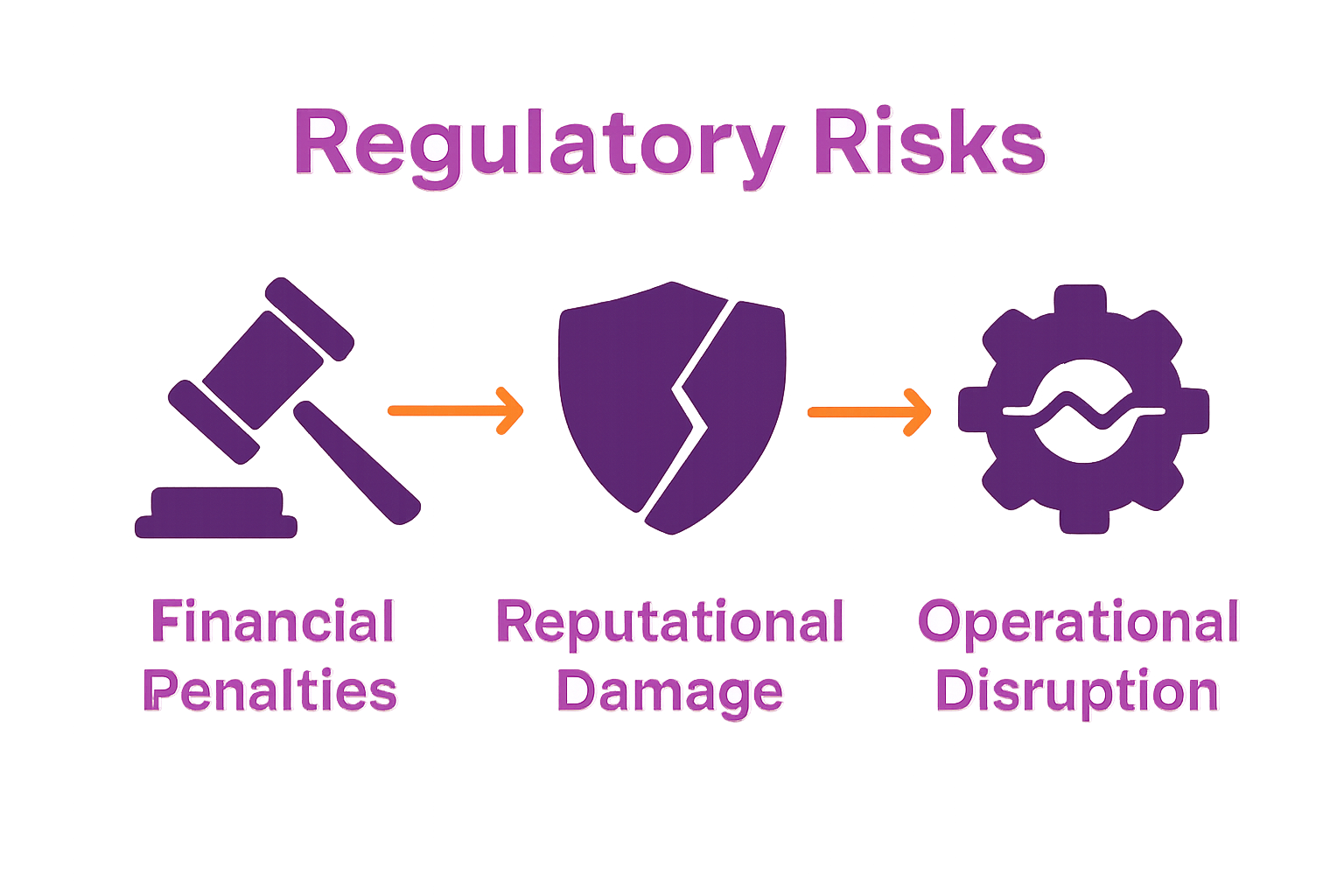
The spectrum of potential liabilities encompasses several critical dimensions. Inadequate compliance explanations can trigger significant enforcement actions, potentially resulting in regulatory investigations, punitive measures, and systematic operational reviews. Reputational damage often represents the most profound and lasting consequence, with potential impacts including loss of customer trust, diminished investor confidence, and substantial challenges in maintaining competitive market positioning.
Key risks associated with regulatory non-compliance include:
Financial Consequences
Substantial monetary penalties
Regulatory fines
Potential revenue forfeitures
Increased compliance remediation costs
Legal Ramifications
Potential criminal prosecution
Director and executive personal liability
Mandatory legal settlements
Potential business licence revocations
Operational Disruptions
Mandatory operational restructuring
Enhanced regulatory monitoring
Mandatory external audits
Potential temporary business suspension
Reputational Impact
Reduced market credibility
Diminished stakeholder confidence
Potential long-term brand damage
Challenges in future business partnerships
Successful risk mitigation requires organisations to view regulatory compliance as a strategic imperative rather than a bureaucratic obligation. Proactive compliance strategies, robust internal control mechanisms, and a culture of transparency can transform potential vulnerabilities into opportunities for demonstrating organisational maturity, building stakeholder trust, and establishing a competitive advantage in increasingly complex regulatory environments.
Essential Responsibilities and Ongoing Obligations
Creating a robust compliance culture requires organisations to establish comprehensive strategies that transcend mere procedural checklists. Regulatory compliance is a dynamic, ongoing process that demands continuous commitment from leadership, systematic implementation of policies, and proactive risk management across all organisational levels. This holistic approach ensures that compliance becomes an intrinsic part of the organisational DNA rather than a superficial administrative exercise.
The Plan-Do-Check-Act (PDCA) cycle provides a structured framework for organisations to systematically develop and maintain their compliance management systems. This iterative approach enables businesses to continuously assess, improve, and adapt their regulatory strategies, creating a responsive and agile compliance infrastructure that can effectively navigate complex and evolving regulatory landscapes.
Key ongoing responsibilities for maintaining effective regulatory compliance include:
Governance and Leadership
Establishing clear compliance objectives
Defining organisational compliance culture
Ensuring top-level commitment and accountability
Policy and Procedure Management
Developing comprehensive compliance documentation
Regular policy reviews and updates
Alignment with current regulatory requirements
Training and Education
Mandatory compliance training programmes
Regular skills and awareness updates
Developing organisational compliance competence
Monitoring and Reporting
Continuous compliance performance tracking
Regular internal and external audits
Transparent reporting mechanisms
Risk Assessment and Mitigation
Periodic regulatory risk evaluations
Proactive identification of potential compliance gaps
Development of risk mitigation strategies
Successful compliance is not a destination but a continuous journey of organisational learning and adaptation. By embedding compliance into strategic planning, fostering a culture of transparency, and maintaining rigorous, flexible systems, organisations can transform regulatory obligations from potential burdens into powerful mechanisms for building trust, demonstrating integrity, and achieving sustainable competitive advantage.
Navigate Regulatory Compliance with Confidence and Expert Support
Regulatory compliance presents complex challenges for businesses operating in high-risk and highly regulated sectors such as fintech, crypto, and gambling. The article highlights that understanding regulatory frameworks, managing risk, and embedding a culture of compliance are essential yet demanding tasks that can overwhelm startups and established companies alike. With evolving legal standards and exacting monitoring requirements, finding trusted guidance to turn regulatory obligations into strategic advantages is critical.
At NUR Legal, we specialise in helping clients overcome these challenges by securing licences and legal support tailored for regulated markets worldwide. Whether you need fast and affordable Gaming Licensing solutions in Curaçao or Anjouan, or reliable crypto licensing in jurisdictions like Georgia or Seychelles, our expertise transforms complex legal compliance into a clear, manageable process. We combine deep regulatory knowledge with efficient service to safeguard your business integrity and growth potential.
Get ahead of regulatory risks today with NUR Legal’s comprehensive compliance and licensing services. Visit nur-legal.com now and secure your future with a trusted legal partner dedicated to your success in challenging markets.
Frequently Asked Questions
What is regulatory compliance?
Regulatory compliance refers to a systematic approach that organisations adopt to ensure they operate within established legal, ethical, and procedural boundaries, adhering to rules and guidelines set by regulatory bodies.
Why is regulatory compliance important for businesses?
Regulatory compliance is crucial for businesses as it helps protect stakeholders, maintains industry integrity, mitigates operational risks, and fosters a culture of ethical business practice. It can also transform compliance from an obstacle into an opportunity for improved operational excellence.
What are the key components of an effective regulatory compliance strategy?
Key components of an effective regulatory compliance strategy include risk assessment, policy development, monitoring systems, training programmes, and reporting mechanisms to ensure ongoing adherence to regulations.
What are the consequences of regulatory non-compliance?
Consequences of regulatory non-compliance can include substantial financial penalties, legal ramifications, operational disruptions, and significant reputational damage, which may undermine stakeholder trust and business stability.
Recommended



Comments