
Turnkey Legal Solutions: Fast Compliance for Startups


Most british fintech and crypto startups face mounting pressure to launch in high-risk markets without stumbling over regulatory hurdles. With over 60 percent of venture-backed fintech founders citing compliance complexity as their main concern, the need for immediate legal clarity has never been more urgent. This introduction reveals how turnkey legal solutions offer streamlined, comprehensive support, allowing ambitious firms to accelerate growth while maintaining full licensing and compliance in even the most unpredictable regulatory environments.
Table of Contents
Key Takeaways
Point | Details |
Turnkey Legal Solutions Streamline Compliance | These solutions provide ready-to-use legal frameworks, enabling rapid market entry and minimising administrative burdens. |
Adapting to Regulatory Landscapes is Essential | Organisations must choose solutions that can easily adjust to various jurisdictions and regulatory requirements. |
Technology Integration Enhances Efficiency | Advanced technologies such as AI can significantly aid in automating compliance processes and documentation management. |
Proactive Risk Management is Crucial | Regular assessments and updates to compliance frameworks are necessary to mitigate legal risks and adapt to changing regulations. |
Definition and fundamentals of turnkey legal solutions
Turnkey legal solutions represent comprehensive, immediately deployable legal frameworks designed to help businesses rapidly establish compliant operations with minimal administrative complexity. These pre-configured solutions enable startups and enterprises to swiftly navigate intricate regulatory landscapes by providing ready-to-implement legal structures that address multiple jurisdictional requirements simultaneously.
At their core, turnkey legal solutions are meticulously crafted packages that include all necessary documentation, compliance protocols, and structural elements required to launch a business legally. These pre-built systems are engineered to minimise intervention and setup time, allowing organisations to focus on core business strategies rather than getting entangled in complex legal procedures. They typically encompass critical components such as:
Corporate registration documentation
Regulatory compliance frameworks
Standard operating procedure templates
Licensing and permit documentation
Risk management protocols
Jurisdictional legal requirements mapping
The fundamental appeal of turnkey legal solutions lies in their ability to compress lengthy legal establishment processes into streamlined, predictable workflows. By providing standardised yet adaptable legal infrastructures, these solutions dramatically reduce the time, complexity, and financial investment traditionally associated with legal business setup. Organisations can effectively transplant pre-validated legal frameworks across different regulatory environments, enabling faster market entry and reduced compliance risks.

The following table compares turnkey legal solutions with traditional legal setup approaches to highlight important differences:
Aspect | Turnkey Legal Solutions | Traditional Legal Setup |
Implementation Speed | Rapid deployment, pre-configured | Prolonged, step-by-step process |
Cost Predictability | Fixed or packaged pricing | Variable, often uncertain costs |
Compliance Agility | Adapts easily to regulations | Manual updates, slower response |
Administrative Burden | Minimal organisational input | Heavy internal resource demand |
Pro tip: When selecting a turnkey legal solution, always verify the provider’s track record in your specific industry and target jurisdictions to ensure comprehensive coverage and regulatory alignment.
Key types and sector-specific variations
Turnkey legal solutions manifest across diverse sectors with nuanced approaches tailored to specific regulatory environments and industry requirements. Alternative Legal Service Providers (ALSPs) have pioneered sophisticated models that address complex compliance challenges through specialised legal technology platforms designed for targeted operational needs.
The primary categories of turnkey legal solutions encompass several critical domains:
Compliance Management Solutions
Regulatory tracking systems
Automated reporting frameworks
Risk assessment tools
Contract Lifecycle Management
Automated document generation
Electronic signature integration
Contract performance monitoring
Corporate Governance Platforms
Regulatory documentation management
Board reporting systems
Governance workflow automation
Financial technology, blockchain, and emerging digital sectors demonstrate particularly sophisticated applications of turnkey legal solutions. Legal technology platforms now integrate advanced artificial intelligence capabilities to streamline complex regulatory compliance processes, enabling organisations to adapt rapidly to changing legislative landscapes across multiple jurisdictions.
Pro tip: Evaluate potential turnkey legal solutions by assessing their adaptability, technological infrastructure, and demonstrated performance in your specific industry vertical.
How turnkey legal solutions function
Turnkey legal solutions operate through a sophisticated, integrated approach that combines technological infrastructure, regulatory expertise, and streamlined process management. These comprehensive platforms bundle legal, technological, and procedural functions into seamless operational frameworks, enabling organisations to rapidly deploy compliant business structures with minimal administrative overhead.
The functional mechanism of turnkey legal solutions typically involves several key stages:
Initial Assessment and Customisation
Comprehensive organisational requirement analysis
Targeted regulatory landscape evaluation
Custom framework design matching specific business needs
Technology Integration
Automated documentation generation
Regulatory compliance tracking systems
Real-time risk management monitoring
Deployment and Configuration
Rapid implementation protocols
Seamless system integration
Minimal organisational disruption
Legal technology platforms demonstrate remarkable efficiency by facilitating plug-and-play legal infrastructure that can be quickly configured and deployed across different operational contexts, dramatically reducing the time and complexity associated with traditional legal establishment processes. These solutions leverage advanced artificial intelligence and machine learning technologies to create adaptive, responsive legal frameworks that can quickly adjust to changing regulatory requirements.
Pro tip: Prioritise turnkey legal solutions that offer transparent integration processes, flexible configuration options, and robust technological infrastructure to ensure seamless operational adaptation.
Licensing and regulatory compliance essentials
Navigating licensing and regulatory compliance represents a critical challenge for startups operating in high-risk and regulated industries. Global entity governance frameworks demand comprehensive understanding of multi-jurisdictional legal obligations and systematic compliance management, requiring sophisticated strategies that extend beyond traditional legal documentation.
The essential components of effective licensing and regulatory compliance include:
Jurisdiction-Specific Requirements
Detailed legal framework analysis
Regional regulatory landscape mapping
Comprehensive documentation preparation
Compliance Documentation
Corporate registration certificates
Regulatory permits and licences
Ongoing reporting mechanisms
Risk Management Protocols
Anti-money laundering (AML) frameworks
Know Your Customer (KYC) verification processes
Continuous compliance monitoring systems
Startups must develop meticulous approaches to understanding and implementing sector-specific legal requirements, recognising that each industry presents unique regulatory challenges. Successful navigation requires a proactive, technology-enabled strategy that anticipates potential compliance complexities and establishes robust governance mechanisms.
The most effective compliance strategies integrate automated tracking systems, maintain comprehensive documentation, and demonstrate ongoing commitment to regulatory transparency. This approach not only minimises legal risks but also builds credibility with regulators and potential investors by showcasing a mature, responsible operational framework.
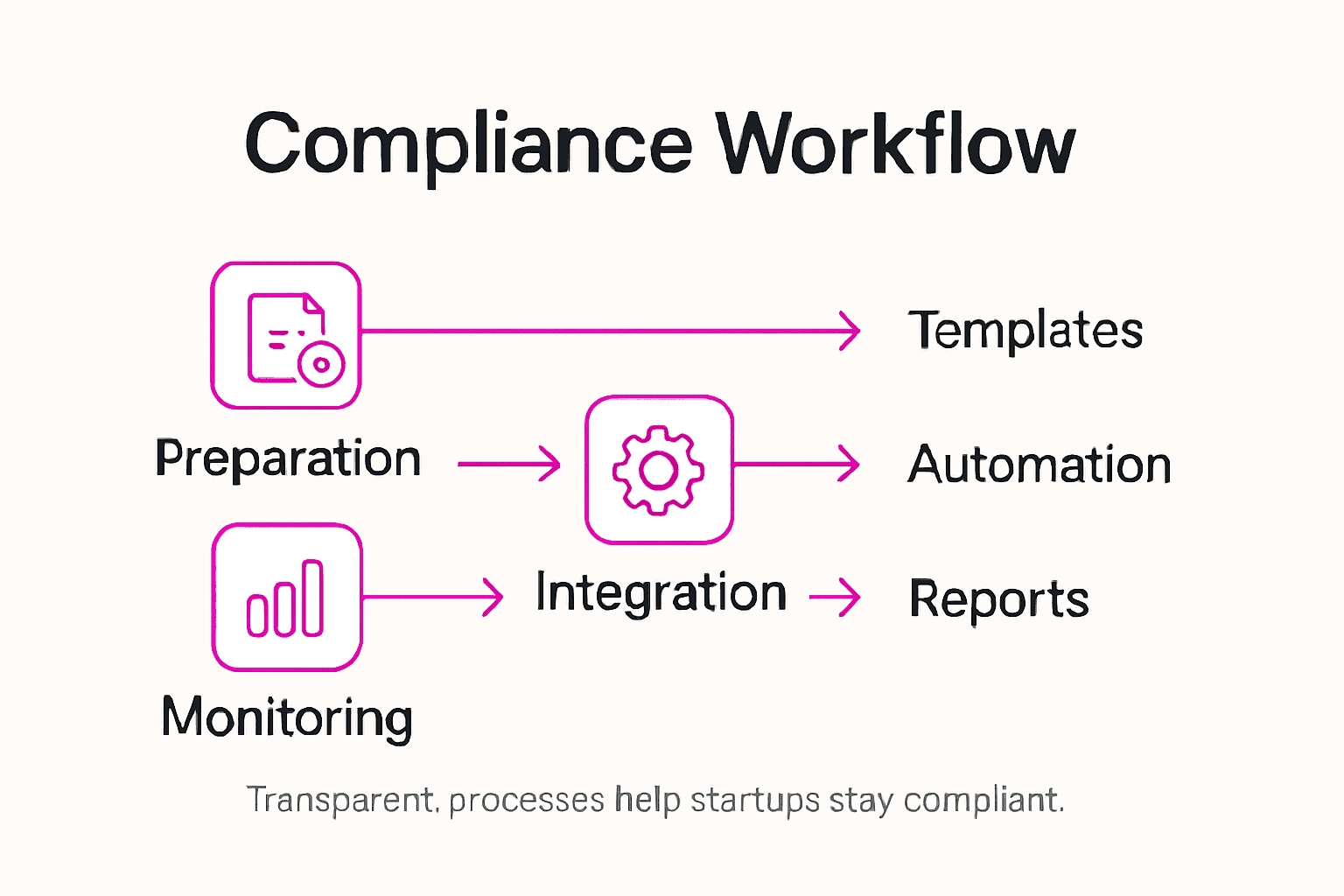
Pro tip: Invest in comprehensive compliance mapping and leverage technology-driven solutions to create adaptive, real-time regulatory monitoring systems that can quickly respond to changing legal landscapes.
Practical obligations, risks and common pitfalls
Navigating turnkey legal solutions requires a sophisticated understanding of potential risks and strategic mitigation approaches. Complex legal ecosystems demand rigorous analysis of stakeholder risks and potential systemic vulnerabilities, emphasising the need for proactive compliance management beyond standardised documentation.
Key practical obligations and potential risks include:
Compliance Risks
Incomplete regulatory interpretation
Inadequate jurisdictional mapping
Insufficient documentation protocols
Operational Vulnerabilities
Ineffective client onboarding processes
Limited adaptability to regulatory changes
Weak contractual oversight mechanisms
Strategic Pitfalls
Over-reliance on standardised solutions
Neglecting sector-specific nuances
Insufficient risk management frameworks
Legal risk management demands comprehensive due diligence and proactive compliance strategies that extend beyond traditional checklist approaches. Successful organisations develop adaptive frameworks capable of anticipating regulatory shifts and integrating dynamic compliance mechanisms.
Effective risk mitigation requires continuous monitoring, robust technological infrastructure, and a holistic approach to understanding regulatory landscapes. Startups must cultivate flexible legal strategies that balance standardisation with contextual adaptability, ensuring comprehensive protection against potential compliance breaches.
Here is a summary of common risks in using turnkey legal solutions and effective strategies for mitigation:
Risk Area | Typical Challenge | Mitigation Strategy |
Compliance Oversight | Missed regional regulations | Conduct periodic legal audits |
Contractual Gaps | Weak standard contracts | Tailor templates to sectors |
Technology Reliance | System vulnerabilities | Perform ongoing system reviews |
Adaptability | Inflexible legal frameworks | Select solutions with customisation |
Documentation Accuracy | Outdated legal documents | Maintain real-time updates |
Pro tip: Implement a quarterly regulatory review process that systematically evaluates your compliance framework against evolving legal requirements and emerging industry standards.
Accelerate Your Startup’s Legal Compliance with Expert Turnkey Solutions
Struggling with the complexities of licensing and regulatory compliance in high-risk industries like fintech or crypto? As highlighted, navigating jurisdiction-specific requirements and maintaining ongoing compliance can cause costly delays and operational risks. At NUR Legal, we understand how crucial swift, dependable turnkey legal solutions are for startups seeking fast market entry without sacrificing legal robustness. Our tailored services cover everything from gaming licences in Curaçao or Anjouan to crypto licences in Georgia and Seychelles, ensuring your business meets all legal frameworks with minimal disruption.
Partner with NUR Legal to leverage our comprehensive legal consultancy designed for technically complex environments. Benefit from our strong regulator relationships and transparent processes to launch your compliant operation quickly and confidently. Visit our website to explore how our ready-made legal solutions can reduce your administrative burden and mitigate compliance risk today. Act now to secure your legal foundation and outpace market challenges with expert guidance. Find out more about our company formation and licensing services to get started.
Frequently Asked Questions
What are turnkey legal solutions?
Turnkey legal solutions are comprehensive, pre-configured legal frameworks designed to help businesses quickly establish compliant operations with minimal administrative complexity.
How do turnkey legal solutions differ from traditional legal setups?
Turnkey legal solutions offer rapid deployment and fixed pricing, whereas traditional setups typically involve a lengthy, step-by-step process with variable costs and greater administrative burdens.
What are the key components of turnkey legal solutions?
Key components typically include corporate registration documentation, regulatory compliance frameworks, risk management protocols, and procedures for licensing and permits.
How can startups ensure effective licensing and regulatory compliance with turnkey solutions?
Startups should develop a thorough understanding of jurisdiction-specific requirements, maintain comprehensive compliance documentation, and implement real-time risk management monitoring systems.
Recommended


Comments