
Role of Regulatory Authorities in High-Risk Sectors


Globally, over eighty countries have developed unique regulatory frameworks, yet even seasoned compliance professionals find british rules particularly demanding. Staying ahead in fintech and crypto means managing constantly shifting obligations as fresh oversight models emerge. This introduction shines a light on how regulatory authorities shape complex sectors from British finance to global crypto markets and what practical steps help legal advisors keep licensing processes on track.
Table of Contents
Key Takeaways
Point | Details |
Role of Regulatory Authorities | Regulatory authorities ensure fair competition and protect stakeholders in complex markets, evolving into strategic guardians balancing innovation with market stability. |
Types of Regulators | Financial, cryptocurrency, and gaming regulators each face unique challenges, but all share the goal of maintaining market integrity while fostering consumer protection. |
Core Functions | Oversight, licensing, and enforcement are essential functions that help protect both institutional and consumer interests in high-risk environments. |
Navigating Compliance | Organisations must develop dynamic compliance strategies that adapt to regulatory changes and integrate advanced technologies to enhance risk management. |
Defining Regulatory Authorities in Complex Markets
Regulatory authorities represent critical governance mechanisms that oversee and manage complex market environments, ensuring fair competition and protecting stakeholder interests. These organisations function as sophisticated oversight bodies responsible for monitoring organisational conduct across multiple industries, with particular emphasis on high-risk sectors such as financial services, technology, and gambling.
In contemporary global markets, regulatory authorities have evolved beyond traditional monitoring roles to become sophisticated strategic market guardians. They must balance multiple complex objectives: fostering innovation, protecting consumer interests, maintaining market stability, and preventing potential systemic risks. This requires developing nuanced frameworks that can adapt to rapidly changing technological and economic landscapes.
The primary responsibilities of regulatory authorities typically encompass several key functions. These include establishing comprehensive licensing requirements, conducting thorough compliance assessments, investigating potential misconduct, and implementing robust enforcement mechanisms. They must also maintain sophisticated intelligence networks to track emerging market trends, technological developments, and potential regulatory vulnerabilities across different jurisdictions.
Understanding the intricate role of regulatory authorities demands recognising their multifaceted nature. They are not merely restrictive entities but dynamic organisations that must continuously evolve their strategies to address emerging challenges in increasingly complex global markets.
Pro tip: When engaging with regulatory authorities, maintain transparent communication, document all compliance efforts meticulously, and proactively demonstrate your commitment to meeting regulatory standards.
Major Types: Financial, Crypto, and Gaming Regulators
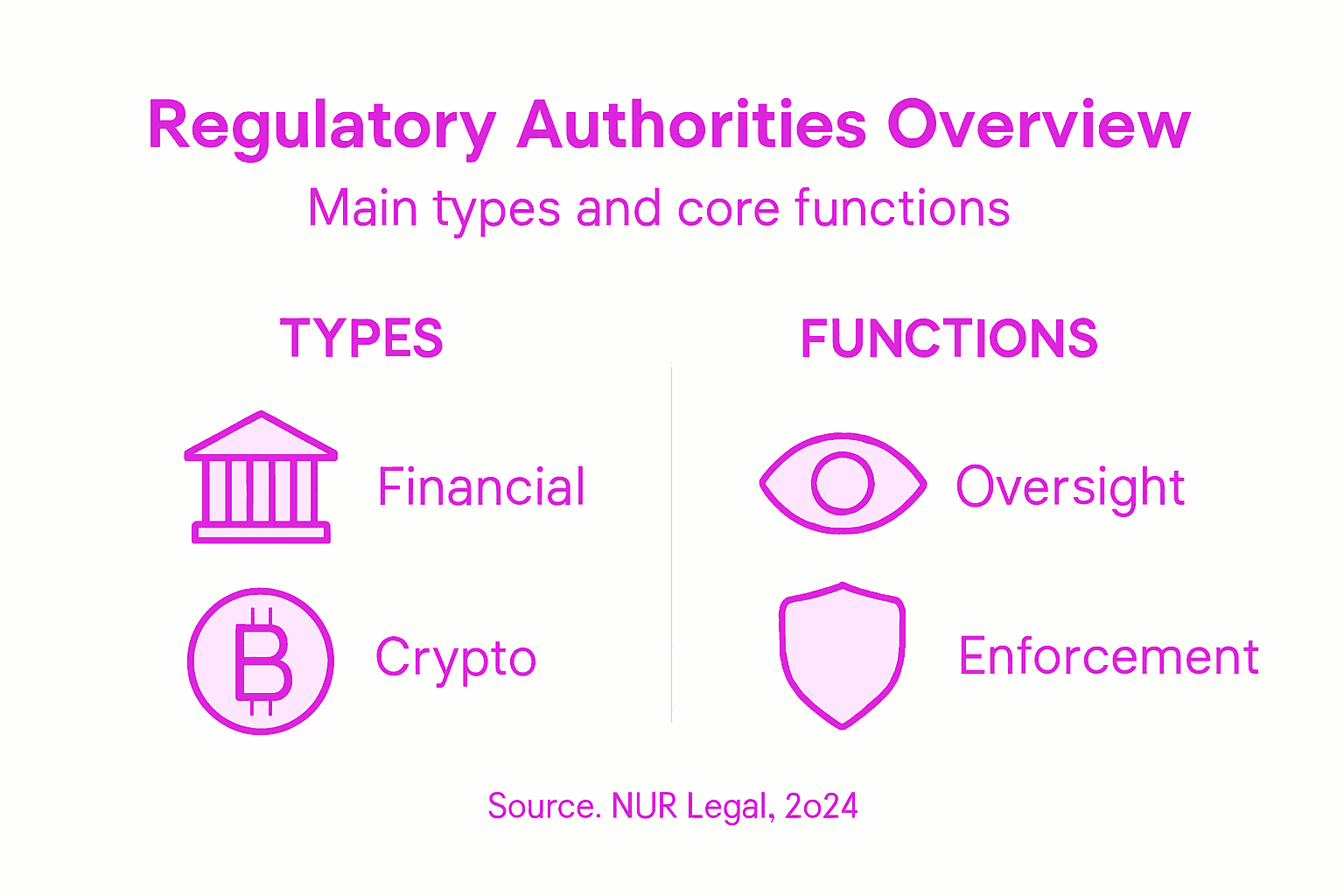
The regulatory landscape comprises three primary domains of regulatory authorities, each addressing unique market challenges and operational complexities. Financial regulators represent the most established category, responsible for overseeing traditional banking, investment, and monetary systems to ensure economic stability and consumer protection.
Cryptocurrency regulators have emerged as a critical new category, specifically designed to address the unique challenges posed by digital assets and blockchain technologies. Global crypto regulatory frameworks are increasingly sophisticated, focusing on managing cross-border risks, preventing financial crimes, and establishing standards for digital asset trading and investment.
Gaming regulators constitute another specialised regulatory domain, responsible for licensing, monitoring, and enforcing standards across both physical and online gaming markets. Their primary objectives include preventing fraud, protecting vulnerable populations, ensuring fair gaming practices, and managing potential financial risks associated with gambling industries.
Each regulatory type operates with distinct mandates but shares fundamental goals of maintaining market integrity, protecting consumer interests, and balancing innovation with risk mitigation. The increasing complexity of global markets demands continuous adaptation and collaboration among these regulatory bodies to effectively address emerging technological and economic challenges.
Here is a concise comparison of the major regulatory authority types:
Regulator Type | Principal Focus | Unique Challenges | Typical Industries |
Financial | Economic stability and consumer protection | Managing complex financial products and systemic risk | Banking, Investments, Insurance |
Crypto | Digital asset regulation and crime prevention | Addressing technological innovation and cross-border issues | Blockchain, Virtual Currencies |
Gaming | Fair play and safeguarding vulnerable groups | Enforcing standards in diverse, fast-evolving markets | Gambling, Online Casinos |
Pro tip: When navigating different regulatory environments, develop a comprehensive understanding of each jurisdiction’s specific regulatory requirements and maintain flexible compliance strategies.
Core Functions: Oversight, Licensing, and Enforcement
Regulatory authorities execute three fundamental functions that form the cornerstone of effective market governance: oversight, licensing, and enforcement. These interconnected responsibilities ensure comprehensive monitoring and management of high-risk business environments, protecting both institutional and consumer interests through systematic regulatory interventions.
Oversight represents the foundational function, involving continuous monitoring and assessment of organisational activities. Regulatory oversight mechanisms enable authorities to track compliance, identify potential risks, and maintain ongoing transparency across complex market ecosystems. This involves detailed auditing processes, periodic reviews, and sophisticated intelligence gathering techniques that allow regulators to anticipate and mitigate potential systemic challenges.

Licensing serves as a critical regulatory gate-keeping mechanism, ensuring that only qualified and compliant entities can operate within specific market segments. The licensing process typically involves rigorous background checks, financial assessments, operational capability evaluations, and comprehensive documentation reviews. By establishing stringent entry requirements, regulators can proactively prevent unqualified or potentially harmful organisations from entering sensitive market domains.
Enforcement represents the regulatory framework’s most direct intervention mechanism, involving the application of sanctions, penalties, and corrective actions against entities that breach established guidelines. These enforcement actions range from financial penalties and operational restrictions to complete licence revocations, depending on the severity and frequency of regulatory violations. The primary objective is to create a robust deterrence mechanism that encourages consistent compliance and maintains market integrity.
Below is a summary of regulatory functions and their impact on business operations:
Function | Description | Business Impact |
Oversight | Ongoing assessment and risk monitoring | Enables early risk detection |
Licensing | Authorisation based on set requirements | Ensures market entry control |
Enforcement | Application of corrective measures | Promotes compliance culture |
Pro tip: Develop a comprehensive compliance management system that anticipates regulatory requirements and maintains meticulous documentation to demonstrate proactive adherence to oversight standards.
Global Legal Frameworks and Oversight Standards
Global legal frameworks represent intricate networks of regulatory standards designed to harmonise oversight mechanisms across diverse international jurisdictions. These sophisticated systems aim to create consistent, transparent, and predictable regulatory environments that can effectively manage complex cross-border business operations and emerging technological challenges.
Regulatory policy frameworks increasingly emphasise systematic stakeholder engagement, evidence-based rulemaking, and adaptive approaches to governance. Modern regulatory standards must balance multiple competing priorities: fostering innovation, protecting consumer interests, maintaining market stability, and addressing emerging technological disruptions such as digital transformation and climate change mitigation.
The complexity of global oversight standards stems from the need to reconcile diverse national regulatory approaches while maintaining sufficient flexibility for local market conditions. International regulatory bodies work to develop coherent frameworks that provide consistent guidelines, facilitate information sharing, and create collaborative enforcement mechanisms. This involves developing sophisticated coordination protocols, establishing mutual recognition agreements, and creating platforms for ongoing dialogue and knowledge exchange among different regulatory authorities.
Effective global legal frameworks require continuous adaptation, robust institutional capacities, and a proactive approach to identifying and mitigating emerging risks. The most successful regulatory systems demonstrate an ability to balance prescriptive standards with principles-based approaches, allowing for innovation while maintaining rigorous oversight and consumer protection mechanisms.
Pro tip: Continuously monitor international regulatory developments and maintain a flexible compliance strategy that can rapidly adapt to evolving global oversight standards.
Obligations, Risks, and Navigating Compliance Effectively
In high-risk sectors, organisations face increasingly complex regulatory obligations that demand sophisticated risk management and strategic compliance approaches. The contemporary regulatory landscape requires businesses to develop comprehensive frameworks that anticipate potential challenges and demonstrate proactive governance across multiple jurisdictional standards.
Risk management strategies must address multifaceted compliance challenges, encompassing financial, legal, technological, and reputational dimensions. Modern organisations require dynamic approaches that integrate advanced technologies such as artificial intelligence and data analytics to enhance risk assessment capabilities and ensure ongoing regulatory alignment.
Effective compliance navigation demands a holistic approach that transcends traditional checklist methodologies. Organisations must develop robust internal governance mechanisms, maintain transparent communication channels with regulatory authorities, and continuously update their understanding of evolving regulatory requirements. This involves creating agile compliance frameworks capable of rapid adaptation to emerging technological and market disruptions.
Successful risk management in high-risk sectors requires a proactive rather than reactive stance. Companies must invest in comprehensive training programmes, implement sophisticated monitoring systems, and cultivate a culture of compliance that permeates every organisational level. By integrating compliance into core strategic planning, businesses can transform regulatory obligations from potential obstacles into competitive advantages.
Pro tip: Develop a centralized compliance intelligence system that aggregates regulatory updates across different jurisdictions and provides real-time insights for strategic decision-making.
Navigate High-Risk Regulatory Challenges with Expert Legal Support
The article highlights the complex obligations and evolving global legal frameworks faced by organisations operating in high-risk sectors such as fintech, crypto, and gaming. These challenges include managing multifaceted compliance requirements, obtaining appropriate licensing, and maintaining transparent communication with regulatory authorities. If you are striving to establish or sustain legally compliant operations amidst this sophisticated oversight landscape, understanding regulatory nuances and proactive risk management is key.
Partnering with experienced legal consultants can transform these challenges into competitive advantages. At NUR Legal, we specialise in providing tailored solutions for companies navigating licensing, compliance, and regulatory enforcement in technically complex markets. Whether you need support with crypto licensing, gaming licenses, or comprehensive corporate legal services, our expertise and strong relationships with regulators worldwide empower your business to thrive with confidence.
Take control of your regulatory journey today. Visit NUR Legal to explore how our efficient and transparent legal services can help you achieve full compliance and secure the necessary licences fast. Do not let regulatory complexity hold your business back. Contact us now to get started.
Frequently Asked Questions
What are the main functions of regulatory authorities in high-risk sectors?
Regulatory authorities primarily execute oversight, licensing, and enforcement functions, ensuring comprehensive monitoring and management of business activities, protecting consumer interests, and maintaining market integrity.
How do regulatory authorities adapt to emerging technologies in complex markets?
Regulatory authorities continuously evolve their frameworks to address rapid technological advancements, balancing innovation with consumer protection, market stability, and effective risk management.
What are the unique challenges faced by cryptocurrency regulators?
Cryptocurrency regulators address challenges related to managing cross-border risks, preventing financial crimes, and establishing regulatory standards for digital asset trading and investment due to the rapidly changing landscape of blockchain technologies.
Why is it important for organisations to maintain transparent communication with regulatory authorities?
Transparent communication fosters trust and helps ensure compliance with regulatory standards. It allows organisations to stay updated on evolving requirements and demonstrates a proactive approach to governance.
Recommended


Comments